Showing posts with label Siegfried Sassoon. Show all posts

Wednesday, 20 July 2016

Poem ~ High Wood Hell - Thursday, 20 July 1916 - Sunday, 23 July 1916


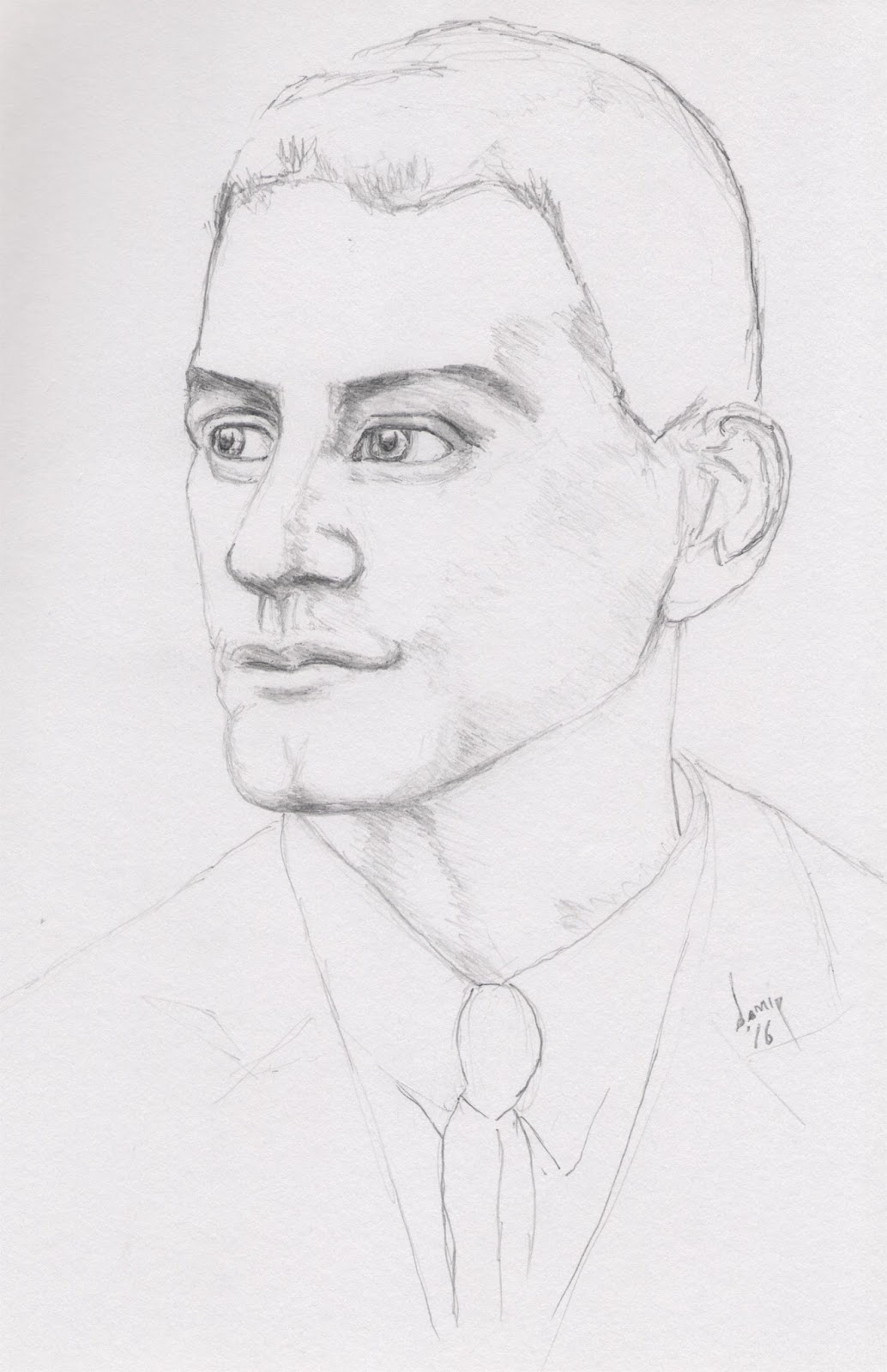
Impression sketch of Robert Graves. [online] See an original image at: <http://www.westernfrontassociation.com/the-great-war/great-war-on-land/battlefields/4527-the-battle-of-loos-a-poets-view-robert-graves.html#sthash.eXmaXOZa.dpbs> [Accessed: 20 July 2016]

i
At a place between communes in Picardy,
Known as Martinpuich and Longueval,
Was Bois des Foureaux - one of many
Woods in the area of the Somme  -
The collected trees significance was
To be known by British as High Wood.

Bazentin-le-Petit and Bazentin-le-Grand,
Lay either side the 100-foot high wooded
Ridge, that gave advantages of views
Across some distance - from the north
Edge - until July this land had remained
Untouched in stillness and cornfields.

Matters began to change in summer
Of 1916 - the German second line had
Become the front line before High Wood,
That in turn became a fortified area -
Progress about was not easy, due to a
Ridge of tree saplings and undergrowth.

Like Mametz before, High Wood came
Under the eyes of General Rawlinson -
The plan was to attack at dawn 14 July;
Corps would make formation of assault
North west of Mametz Wood, outwards -
Including divisions at Bazentin le Petite.

Bazentin le Grand and Longuvel would
Also be significant from the first phase,
Forming advances at Battle of Albert -
The infantry would assemble during
Darkness, towards the enemy's second
Line - that had then become their front.

This was General Rawlinson’s plan,
To further include ambitions to involve
Cavalry - a division of Indian riders set
To capture High wood - manoeuvres of
Push and relief would gain occupation -
11 July saw the start of bombardments.

Wood battles virtually coincided, with
Overlapping attacks - close by Mametz  
Was where Lieutenant Siegfried Sassoon
Gained his name Mad Jack, in reckless
Reaction to death of David Thomas -
Then another friend arrived in the area.

Robert Graves, receiving promotion
To Captain, initially stayed in Rouen -
Yet in days orders sent his battalion
To the Somme; by train to Amiens
They marched - all hopes to join 1st
Welch altered, to find him with the 2nd.

These two officers had made a close
Friendship fused by mutual interests.
Learning he was in the area, Sassoon
Sent a note to see if Graves might see
Him; despite riding to where his friend
Lay in reserve, the two failed to meet.

On that dawn of 14 July new light saw
A rush for fresh objectives - the early
Hour would obscure sights of German
Machine gunners from Longueval
And Bazentin le Petite - within minutes
Unfolding into Battle of Bazentin Ridge.

ii
In reality the wood had been abandoned
By Germans - yet delays formed from
Counter orders of Lt Gen Henry Horne;
As Longueval gain was incomplete.
Finally the 7th Division moved forward,
Taking the southern part of High Wood.

With German counter attacks battle
Commenced, as Cavalry delays from
Morning did not move until evening.
By early hours of 15th July, cavalry
Formed a line from Longeuval, across
To High Wood - alarming the Germans.

Reports told how the British had broken
Through - Bavarian reserves were then
Sent to halt them - but such facts proved
Wrong, the Bavarians went back towards
Reserves as Switch Line machine-guns
Stopped the British; the time 9 a.m.

An evening battle would then commence
5.15 p.m. - time delay changed to 6.15 p.m.
Yet that passed still later, when south
West of woods edge saw the 2nd Queens
And reinforced by Staffordshires - matters
Seemed to progress well on one level.

Expectation had been for the long
Awaited Cavalry's turn, as they poised
At Crucifix corner, where the metal
Body of Christ witnessed their moves
Into battle - the contrast of ancient lance
And modern guns saw cavalrys only day.

South of High Wood at the intersection
Of roads, poised the metal Christ figure.
Stretched on the cross, giving witness
Of last rites, for thousands that passed
His way into Death Valley; such a route
Of transport subjected to endless shells.

The Switch Line ran through the trees,
To prove a wall as German artillery
Hailed another counter attack, in order
To retake part of High Wood - towards
5 p.m. British attempts could not budge -
Defense by 11.25 p.m. made withdrawal.

Instead the artillery turned their aim
Onto High Wood about the pivotal
Switch Line and trenches then packed
With Germans, whose intense company
Attempted to edge south, only halted
By British barrages on into darkness.

During such events, two poets made
Luck, spending daylight hours through
Darkness with civilized conversation -
A short distance from uncivilised sounds
Of thunderous gunnery, to echo down
Valley, lit by dim stars and camp fires.

They parted during the night of 14 July.
In the day of 15 July Captain Graves
And battalion set off on their march
To the front - about them was country
Landscape of villages set in fields, with
Wooded hills beneath summer’s sky.

iii
Arriving in something of a city of tents,
Encampments of great numbers
Of men - officers on horseback trotted
About, as other horses pulled guns -
While more were tethered, ready for
Cavalry advances after breakthrough.

Under the rhythmic march of boots
From grassy lanes, whose softness
Turned to gritty earth, crushed by
Countless thuds of marching allied
Boots - thousands had already 
Passed over the same uneven road.

Ridges formed in mud by artillery
Wheels and hoof marks, trying
To dry in intermittent sun - only
Softened again  by heavy bursts
Of rain - march, march - endless
Thuds of heavy boots on ground.

By gradual distortion, fading from
One to another changes, almost
To appear unnoticed - gun effects
Had swept away summer's grass
And soft summer lanes, scarred
Into a winterish hell of desolation.

Bodies of bloated horse and mules
Intermingled with corpses in poses
Of contorted death, in or out of holes,
Churned by artillery - lay neglected,
Almost forgotten, in the business
Of the living yet to join dead ranks.

In arrival near Mametz Wood was,
Unlike its name, no longer a wood.
For no tree within its perimeter was
Left undamaged  - there the fusiliers
Set up bivouacs amid summer grass
Tinged black, bodies instead of flowers.

Perhaps developing a type of blinkers
In familiarity of death, never to quite
Register dead forms about - days
Followed in occupation of lying about
In fresh shell holes to watch artillery,
As in a sports game, back and forth.

Almost twenty days since the start,
This was no longer a fresh battle -
Attacks had followed attacks, driven
Back by counter attacks  - still on
They went, driven by orders with
No thought to refuse, as toll rose.

Daily perhaps 10,000 more to be
Killed or wounded, yet from some
Where more troops came, to enter
The fight - in hopeful repetition over
Some significant piece of ground,
That once had been insignificant.

V
As a bystander, time was spent lying
In shell holes to watch the dueling
Artillery, noted Captain Graves, until
Finally the day of 17 June - repositions
To Bazentin-le-Petit by routine work
In midst of battle to deepen trenches.

His relief came in a parcel of kippers
In the steady beat of time, where
Minutes are beaten in shellfire thuds.
Time had no meaning in calendars,
As nothing much happened over two
Days, until the evening of 19 July.

Scottish Rifles and the Cameroons
Were to lead another assault on High
Wood - early on 20 July 400 men
Of the 2nd Battalion were to be held
In reserve - sooner or later Graves
Knew that they would be involved.

The Scottish made some success
Into the woods, as the Welch waited
In reserve on a ridge - not needed
As yet  - the decision was to move
Back 50 yards, prompted by heavy
Barrages from 6 and 8 inch shells.

Captain Graves, along with others,
Lifted to his feet to run - a downhill
Direction close to shattered trees,
Where a small cemetery aptly sat -
Like some foreboding presence at
The passing soldiers of the Welch.

Scything shells were falling heavily
About as Graves running, focusing
On path ahead, in sheer exhilaration
From danger - then a shells collision
Struck, three paces behind him - air
Rushed as in spontaneous typhoon.

With the impact Graves felt a thud -
Some boxer’s fists between blades
Of his shoulders, most likely blast
Concussion - instant metal fragments
Sheared through air and flesh; blood
Trickled into his eyes he had been hit.

His feet lost their way, shouting out;
'I've been hit.' Graves words slurred
Into semi oblivion - fragments had
Bounced up near his groin, a second
Sped to slice through his flesh to enter
His right, slicing out through his breast.

Others were quick about him - Captain
Dunn, a doctor dressed the wound.
Graves lapsed in and out of strange
Consciousness - some force lifting him
Realising this was a dip of a stretcher,
To wink at the bearer who looked to him.

'Gravy's got it.’ Then out of it he awoke
In agonising pain - finding he lay in some
Corner of a dressing station, put quietly
Aside to die - Therefore for a time among
The already dead he died - when amidst
Body clearance, Graves breathed again.

By Jamie Mann.

Graves, R.P., 1987. Robert Graves The Assault Heroic 1895-1926. Elizabeth Sifton Books, Viking. Richard Cohen Books.  Book 4 Ch. 8

Source: File: Attacks on High Wood. Wikipedia, the free encyclopedia. Available at: <https://en.wikipedia.org/wiki/Attacks_on_High_Wood> [Accessed 20 July 2016]

Mann, J., 2016. 100 years Ago - Poems by Jamie Mann. [letter] (Personal communication, 20 July 2016). 


#WW1 #WW1centenary #GreatWar #WW1poem #GreatWar #WW1centenary #worldwarone #worldwaroneremembered #WW1HighWood

Monday, 18 July 2016

Poem ~ Mad Jack At Memetz - Tuesday, 18 July 1916

Source: File: Siegfried Sassoon.  See an original image at: <https://www.poetryfoundation.org/poems-and-poets/poets/detail/siegfried-sassoon> [Accessed 15 July 2016]

 i
The initial Big Push had begun slowly
Yet still effective in some parts across
The Somme - one being Mametz village;
Taken on day one, yet the wood close
By remained occupied - in a 'clear out'
The wood fell to the 38th Welsh Div.

These Welshman consisted of those
Volunteers of 1914 and 1915, whose
Battle virgin status and limited training,
Faced well-trained elite Germans force.

The wood of Mametz was dense -
A great wall of trees that contained
A defensive force - when on day 7
Time came for the Welsh to move in -
A morning retake of day one, except
This day opened wet and cold.

No optimism of a fine summers day -
Trench Mortars and machine guns
Held the wood, while the artillery set
To blast a path over sodden ground.

Prior to the 38th, the 7th division
Had acted on word of a captured
German - that the Boche troops had
Fallen back - a Welsh patrol moved
Into the wood, disabling two field
Guns as they killed a German patrol.

The initial attack of 7th division made
On 4th and 5th day, began but failed,
From eager German gunnery and wall
Of uncut wires, that prevented any real
Progression into the occupied wood.

Day 7 saw divisions in place - with
The Royal Welch lying in reserve -
The 17th Division's approach came
West - at the east from Caterpillar
Wood were the 38th - while 16th
Crossed the whole of Hammer Head.

Air rustled the wood of Mametz,
As light at 5.30 a.m. began a rain
Of gas shells fired by French - wind
Lifted to disturb the screen of smoke,
Intended to hide the troops advance.

Dispersed ahead along the woods
Edge, machine guns eyed 400 yards
Of open ground - dull, momentary
Silence drowned by rattles at sight
Of the Welsh, raking at thigh level.

French eyes saw the bravery rush
Forth of Welsh men, in admiration
Of endurance and courage - youth
Faced an avalanche of falling fire.

One officer of France watched
The young run, like veterans of war,
Under the burning intensity of fire -
Fire seemed to fall on shoulders
As a mockery of carnival confetti;
The men lay momentary on earth.

Keenness had led them too far
Ahead for support's readiness -
Like a paused machine rewound,
Forward troops waited for signs.

Then the living lifted again upon
Feet, striding out - bullets swept
Seemingly to pass harmless
Through the ranks - in descent
Upon the parapets their senses
Fixed, without register of noise.

ii
Amid their vast, anonymous
Presence of the Welch, fought
Figures - Robert Graves, poet
Friend to Lieutenant Sassoon.

Despite rain delay of objectives
All pushed on as at Quadrangle
Trench - with little wire before
This hole, a Lieutenant Sassoon
Took a step down, into the left
Edge of an enemy strongpoint.

Strategy's had become slightly
Confused - orders had been
For Sassoon to turn about - all
This went against his ambitions.

Finding three glum faced fellow
Officers on a fire step, Sassoon
Took stock - news of two others
Had returned wounded, though
Communications still remained
With Northumberland Fusiliers.

The Lieutenant considered that
More to be done by some type
Of venture within, Sassoon set
Out to explore, to discover more.

'Young Fernby,' unlike the glum
Threesome, wore some exultation
On his expression - to tell no news
From their right, while the Royal
Irish were believed to have failed -
The two of them moved outward.

Evidence suggested that they had
Interrupted the Germans attempt
To dig in - their equipment along
With packs, lay all about the edges.

Among these belongings some
Welsh were ferreting - while others
Shot wildly into the trees - there
Sassoon paused, as twilight smoke
Drifted about the scenery, he felt
Oddly excited amid total disorder.

Without NCOS about to take any
Orders back officer Sassoon likely
Felt on equal level of those about
Him - yet this was not quite enough.

Clarity came, that the waist high
Trench needed to be deeper -
A few hours of darkness would
Give way to light - prompted
Sassoon saw two privates argue
Over of a pair of field glasses.

In a swift move he turned to aim 
His pistol at them - to stop fooling
And start digging - the dipping
Earth was in places a foot deep.

Much work of sniping had been
Success; wounded and dead lay
About as daylight etched at the
Dark - then German forms started
To emerge impassive and equal
In the events of a catastrophe.

iii
Sassoon stepped over bodies
And by some impulse stooped,
Lifting one male form upright -
To prop him against the bank.

His tunic was knotted about his
Shoulders, as in some casual
Civil way - he had been killed
Digging - striking looks, blond
Hair and untouched fair features,
Only slightly marked by mud.

In his stillness, Sassoon wiped
The dirt from his eyes and face
With his sleeve - judging him 18
The German youth lay awkward.

Sassoon lifted him again to more
'Comfortable' position for a live
Person - this was the first time
He had touched any enemy -
Within him some consideration
Struck him at that 'gentle face.'

Moments passed as in eternity;
The German handsome youth
Became representative of futility -
Fresh in death, went against what
Expectation of battle should be.

The spell of eroding grief ended
As he was joined by a fellow -
They, on hands and knees, edged
Down until they met a bombing
Post - another three Welsh told
That no one had gone further.

With Kendle's company Sassoon
Acquired a bag of mills bombs -
In mutual desire to explore they
Crawled on some 70 yards - until
The depth was barely a groove.

While carnage lay at their backs
They looked towards a shallow
Valley - down to a light railway
Line, out of which popped shots
Of rifle fire and head movements;
Both felt on an elated adventure.

Kendle excited by their position,
Decided he would take a shot
And edged out of their cover,
Onto broken ground to make aim.

Lewis gunners joined them as
Kendle half knelt and pushed
Up his tin hat to get better aim -
Squeezing the trigger he fired,
Smiled and fell sideways dead;
A bullet hit him above his eyes.

Almost as some ricocheted action,
Or crazy duel that downed Kendle,
Sassoon instinct took him on a lone
Mission, with the bag of mills bomb.

With these hanging about him,
Along Wood trench he shuffled,
Down to where Germans held
Ground - a short way ahead
Was the sight of some ditch -
Sassoon weighed his first bomb.

The hole was still occupied - with
A pelt Sassoon advanced and
One after another, yelled his four
Bombs over arm, at the enemy.

With surprise at success each
In turn exploded - so with smoke
At their heels, some sixty scared
Germans made abandon of their
Hole - to run for hell into Mametz;
Witnesses to the Mad Jack event.

By Jamie Mann.

Source: File: The Guardian: Inside an enemy trench, by Siegfried Sassoon 10 November 2008. Available at: <https://www.theguardian.com/world/2008/nov/10/first-world-war-siegfried-sassoon> [Accessed 18 July 2016]

Source: File: Mametz Wood and the 38th: The Welsh at the Somme
By Lieutenant-General Jonathon Riley Military historian. 6 July 2016 . Available at: <www.bbc.co.uk/news/uk-wales-36667730> [Accessed 18 July 2016]

Source: File: The Long Long Trail. The capture of Mametz, 1 – 5 July 1916. Available at: <http://www.longlongtrail.co.uk/battles/battles-of-the-western-front-in-france-and-flanders/the-battles-of-the-somme-1916/the-capture-of-mametz-1-5-july-1916/> [Accessed 18 July 2016]

Source: File: Battle of Mametz Wood 5th - 12th July 1916. Available at: <http://www.130thstjohnfieldambulance.co.uk/index.php/ct-menu-item-13/ct-menu-item-25> [Accessed 18 July 2016]

Source: File: Welsh History Month: Mametz Wood 9 Apr 2012, Dr Robin Barlow. Available at: <http://www.walesonline.co.uk/news/wales-news/welsh-history-month-mametz-wood-2047333> [Accessed 18 July 2016]

Mann, J., 2016. 100 years Ago - Poems by Jamie Mann. [letter] (Personal communication, 18 July 2016). 


#WW1 #WW1centenary #GreatWar #WW1poem #GreatWar #WW1centenary #worldwarone #worldwaroneremembered #WW1Mametz

Tuesday, 1 March 2016

Poem ~ Sassoon: A Brother Lost - Wednesday, 1 March - Monday, 6 March 1916

Impression sketch of 2nd Lieutenant Hamo Watts Sassoon, Royal Engineers - by Jamie. From an original image that can be seen at : <https://livesofthefirstworldwar.org/lifestory/3904659> [Accessed: 1 March 2016]

Impression sketch of Siegfried Sassoon and David Thomas - by Jamie. From an original image that can be seen at : <http://www.ww1photos.com/TheGeneral.html>
 [Accessed: 1 March 2016]

i
In normal peace and seasonal joy,
When time comes for winter to abate -
A fact across common centuries,
Whereby all mankind looks towards
Days of becalmed spring - yet likely
For a soldier of 1916 might only come
Greet relief from cold, wet and mud.

In cleansing of brighter, lighter
Days amid drifts of mild air - might
A glance back over bleaker days
Find some relief for any frontline
Trooper, seeking retrospection  -
By February's leave Lieutenant
Siegfried Sassoon contemplated.

An old year classified as some
Other country, which had seen
Friends bound in Cambridge
Companionship - while most dull
Officer training, banished spirits
Of half Moon Street - Sassoon
Swapped gown for khaki uniform.

In company of brotherly comrades,
Lay undercurrents of romantic
Notions, unbroken - yet Cambridge
Books gave no wild experience;
When separation finally loomed.
To bring final leave, prior to some
November embarkation for France.

Men always departed and always
Casualty lists arrived - mirrored
In dread of telegrams for families,
Sassoon was to find one entwine
His fingers - his brother two years
Younger - he too had fallen victim;
Hamo Watts Sassoon aged 27.

Their early closeness had faded,
As the two brothers interests had
Grown apart  - yet still came hurt
By a wound that perhaps initially,
Not so serious - Hamo Sassoon's 
Unit had been repairing wire, as
Some sniper's bullet hit his leg.

28 October 1915, found Hamo
Stuck; he held back need to call,
Not to give his position to enemy.
Eventually Hamo crawled away
And fell into the trench - when
A dressing was applied, Hamo
Was moved to a clearing station.

The wound to his leg was not
So simple - the Turkish bullet
Had caused enough damage
To require amputation - While
Hamo made light of this fact,
He died as the wound turned
Septic - his body buried at sea.

ii
Out of grief, Siegfried Sassoon
Felt relief when the full troop
Train pulled out of Victoria.
Now he had one more debt
To pay, for his brother Hamo.
18 November was to find
His arrival at Etaples camp.

As a commissioned officer
With the Royal Welch Fusiliers,
Second Lieutenant Sassoon
Was posted to 1st Battalion -
To join C Company at Bethune,
Close to Le Hamel - where
He worked for a few months.

Down among communication
Trenches, his 60 men were
To lug supplies, from tramlines
Over marshes - a distance
Lit by intrusive flares, to reach
The sodden trenches - where
In frost and mud they dug more.

To keep a vow to become a poet,
Sassoon’s time began to alter
With baptisms of experience -
First came initial encounters with
Exalted salvation - whereby dirt
Stained Christ wearing a woollen,
Hat, cursed at being stuck in mud.

Still an infant officer that looked
To war's adulthood, an injection
Of a stranger wandered inside
To pause in C Company’s mess -
A fellow officer Robert Graves,
Who then spied a book to bear
A title, neither military or trash.

He met the owner's scrawled,
Signature, S. Sassoon - they
Identified their unity - as officers
Set to discuss poetry till dusk.
Graves revealed his collection
Over the Brazier, at which the
Other frowned at such realism.

Common in ideals and oddly
Germanic sounding names
Von Ranke Greaves, Siegfried
Sassoon Shared suggestions -
Old soldier Greaves advised
The man his style would alter;
Still yet to dip his nib in mud.

iii
In sudden friendship the two
Poets took their honeymoon
Onwards, without complicated
Marriage or future signs for
Likely divorce - as Sassoon
Was sent from Flanders to
Picardy and Somme valley.

Out of University and safety,
Siegfried was to find some
Escape to see life’s fragility -
Facing inwards he looked
Outwards, on a road peopled by
Temporary human existence.

Picking out from marching sullen
Faces, a man clean-shaven
Amid the dirty faces. He searched
Spirits of men - another form,
A red haired youth, whose sharp
Green eyes stared into distance.

Seeing the unavoidable path
That he would likely follow -by
The fate of his brother - ready
For the day of mighty sleep,
Sassoon spent leisure time
Riding horses behind the lines -
Amid his own silent thoughts.

If death could be liberation,
Life of poetry possessed
His spirit - with the moments
Shared in ambitious friends;
David Thomas and Graves -
Whose writings while real,
Had left him wanting more.

Sassoon brooded on desire.
Yearning to get away from
Winter's bleak dull drabness,
To open up colours of spring -
Barely linking victory to war,
He passed by woe of slain men,
To prefer a garden of colour.

All which could only attract
Readers to his unrealistic
Mood - that could only satisfy
Temporary disenchantment -
Past January into February
Was duty as a working officer,
To replenish frontline needs.

Still hung want of cynicism.
Brooding below his surface
Sassoon penned words
In opposition of a bright title
In the pink - optimism dies,
As a soldier questions, why?

iV
In a surreal, weary world, rode
The officer daily to his office
Of communication trenches -
Then back to a commuter's
Village of civil talk and lights -
Catching glimpses of grim war.

Hanging between two entities,
Sassoon felt he faced a temporal
War - to be a poet that still lacked
True experience - to undergo
A further day in February leave;
He was a man crossing a bridge
That turned, to never quite link.

With three months war under 
His belt, Siegfried saw London
And home as not quite right - in
Evenings on half Moon Street,
A concert and trip to Weileigh -
All seemed somehow empty.
Relief came by return of March.

by Jamie Mann.

Roberts, J.S., 1999. Siegfried Sassoon. Richard Cohen Books.  Ch. 4

Mann, J., 2016. 100 years Ago - Poems by Jamie Mann. [letter] (Personal communication, 1 March 2016). 


#WW1 #WW1centenary #WW1poem #GreatWar #WW1centenary #worldwarone #worldwaroneremembered #WW1Poets