Showing posts with label British Aircraft. Show all posts

Sunday, 6 August 2017

Poem ~ Fighting Above The Mud, Monday 6 August 1917 - Wednesday 8 August 1917


Source: File: German Aerodrome. See an original image at: <http://www.earlyaeroplanes.com/archive/image5/GermanAerodromes.jpg> [Accessed 06 August 2017]

Winter in August enshrouded
In dankness; an army dug in as well
As they could into a swampland.
Vile Flemish weather created
Glutinous mud; shell holes as ponds.

As insects in a ploughed field
Walking wounded made their way as
Best they could, trying to avoid
Shelling arriving at clearing
Stations, as weary figures of mud. 

The foulest of weather was not
Confined to ground, where in the air
The forces of aircraft did not
Hesitate to take part over
Enemy territory to create havoc.

31 July saw keen embarkation
Of eager airmen to add their part,
Swooping low over marching
Heads of enemy to scatter
Them, or taking bombs to camps.

These airmen often flying low
At tree height - as one air pilot did
Till coming to an aerodrome.
He targeted the hangers - those
On ground initially saw him as own.

Then a bomb hit the first hanger
Causing panic, whilst he swooped
To the open doors firing inside -
Lifting, soaring to the second
Shed to provide a gift of a bomb.

A third hanger took another
Bomb; a delay in the handle's action
Sent fourth bomb onto ground
Near to a railway siding, close
To a train - the Germans took aim.

They fired at the English
Plane but the pilot undeterred led
Straight into them in return
Of fire, to scatter them about -
At 20ft to target the sheds again.

Firing last of his bullets the pilot
Lifted away to a cloud. With renewed
Ammunition this aerodrome
Saw the return of the flyer so
Low to skim the ground again,
Firing into hangers on mechanics.

Having left that aerodrome
In disarray, the English pilot came
Across two German officers
On horseback, to dive low
Over their heads; the horses bolted.

Further along from a height
the pilot swooped to a marching
German column, letting loose
Fire In their midst, they scattered
To seek safety in ditch and hedge.

Having used all ammunition
The pilot retreated to fix a third
Drum - he emerged from
Cloud to discover German
Craft in pursuit in ariel battle.

In evasive action and
Reaction the three fought briefly,
Until in pursuit a German
Crashed to ground to see
A German crowd gather round.

Without hesitation he turned
Again and targeted the crowd.
The British pilot left them
To encounter a civil train
Finishing bullets returned to base.

by Jamie Mann.

Gibb.P,1917. Heroic Airman In The Battle Of Flanders -Amazing Exploits. The Daily Telegraph, [online] 03 August 1917. P.5. Col.5-6. Available at: http://www.telegraph.co.uk/news/ww1-archive/12214748/Daily-Telegraph-August-3-1917.html [Accessed: 06 August 2017].

Mann, J., 2016. 100 years Ago - Poems by Jamie Mann. [letter] (Personal communication, 06 August 2017). 


#WW1 #WW1centenary #GreatWar #WW1poem #GreatWar #WW1centenary #worldwarone #worldwaroneremembered #WW1Belgium 

Saturday, 23 January 2016

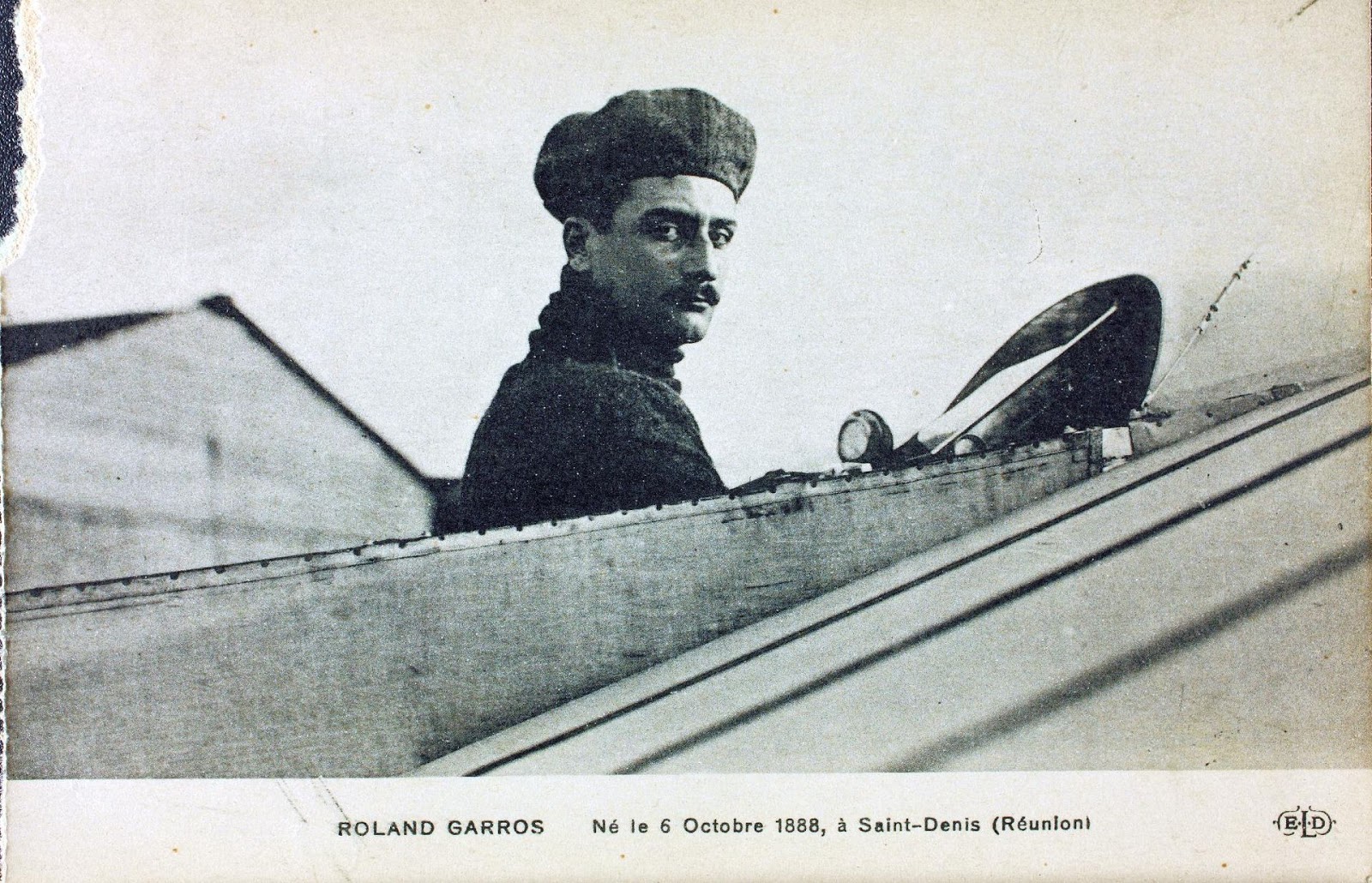
Poem ~ A. Fokkers Machine Gun - Sunday, 23 January 1916


Source: File: Pilot Roland Garros.jpg. [online] see an original image at: <https://en.wikipedia.org/wiki/File:Roland_Garros_%28aviator%29.jpg> Accessed: 23 January 2016].

Impression sketch of Anthony Herman Gerard Fokker - by Jamie.

While the Fokker types had been fighting
The skies for some time already,
It came to be heard in the French British
Headquarters, of Berlin's jubilations
For the latest Fokker Type's success.

From the early days of observer crafts,
To the types on both sides to drop
Bombs on their opponent’s soil, restless
Innovations went stages further,
Adding machinery of mounted guns.

While there had been varying successes,
A big step had been made by French -
No April's Fool, Roland Garros took to sky
1 April 1915 - to pilot his aircraft,
Fitted with a specialist machine gun.

Armor plating had been fitted to the lower
Blades, added to deflect any bullets
Most likely to damage spinning propellers -
This success led to five kills;
In a short time Garros became an ace.

Within twenty days pilot Garros' craft
Was taken down behind enemy
Lines - German aircraft builder Anthony
Fokker was under rapid orders,
To replicate the French gun's ability.

Overcoming the Frenchman's rudimentary
Methods, to allow propeller's action
To take control of the firing mechanism -
The bullets would fly through
Gaps of the spinning aircraft blades.

The skeptic Generals saw the success
Of a demonstration, to order
Fokker to take to the sky in a practical
Test - when on targeting a French
Plane Fokker declined to make a kill.

Fokker the engineer was not a killer -
To tell the Generals they would
Have to take that step - this they did
As a German pilot proved
The effectiveness of gun's success.

This fact soon became obvious
To those of the allied crafts -
As the numbers of Fokkers being
Responsible for downing
Allies - seen as temporary advantage.

In order to influence allied optimism,
Given opposition of enemy
Purposes, who faced allied spirits -
To send ten British planes 
For every German who ventured close.

Temporary Fokkers successes lay 
Under the banner of what 
was in preparation - that revelations
Would be soon flying out
From Britain's upcoming surprises. 

by Jamie Mann.

Anon.,1916. Air Fights In France - Britain's Coming 'Surprises'. The Daily Telegraph, [online] 22 January 1916. P.10. Col.5. Available at http://www.telegraph.co.uk/news/ww1-archive/12108572/Daily-Telegraph-January-22-1916.html [Accessed: 22 January 2016].

Mann, J., 2016. 100 years Ago - Poems by Jamie Mann. [letter] (Personal communication, 22 January 2016). 


#WW1 #WW1centenary #GreatWar #WW1poem #GreatWar #WW1centenary #worldwarone #worldwaroneremembered #WW1Germany

Friday, 15 January 2016

Poem ~ In The Lap of a Dead Man - Saturday, 15 January 1916

Impression sketch of Flying Corps Officer crawling to pilots seat - by Jamie.

With the fearless nature of youth,
That has a tendency to try
Anything new - were proof
Of right stuff for the Flying Corps.

Such were the type as those two
That took off on a course -
At 10,000 feet into danger
Of airspace to encounter enemy.

One young flying Corps officer
Returned a letter home,
To tell of both their fates,
As they flew in clouds to fight.

In the front seat of the aircraft,
An officer led challenge,
As two German planes
Opened up gunnery at them.

The fight reached a stage, when
The burst of a shell close by,
Shook the craft - shrapnel
Burst through the air past him.

Within five, ten, twenty seconds,
The craft fell, twisting
Down to five thousand
Feet, the craft rocked as he looked.

The young pilot Barnaby, aged 19,
Was dead from shrapnel -
The only thing he could do
Was to reach the controls behind.

In the swaying air he made a move,
And climbed to sit on dead
Barnaby’s lap to pull controls,
Levelling out of that death plunge.

Cutting out the engine the officer
Guided the craft to ground -
Knowing Barnaby's death
At 10,000 feet, gave him time to act.

Admitting to his shock, the officer
Told how he forget virtually
Everything over two days -
When captured in December 1915.

Such can be the brazenness of youth
To approach game combat
As a sport - to meet victorious
To shake hands in fight's conclusion.

In meeting the English speaking
German, he learned how
His machine gun forced
Him down - having shot petrol tank.

By mutual English acquaintance,
Two German officers,
Gave him champagne
And dinner of oysters, in civil irony.

From honour among pilots, perhaps
Knowing shared dangers -
He arrived at a prisoner
Of war camp to share with officers.

The observer concluded to say how
Playing tennis and hockey,
With eight English officers
Helped cure shock; being well treated.

by Jamie Mann.

Anon.,1916. Thrilling Air Fight - Descent With A Dead Pilot. The Daily Telegraph, [online] 15 January 1916. P.10. Col.3. Available at: http://www.telegraph.co.uk/news/ww1-archive/12093316/Daily-Telegraph-January-15-1916.html [Accessed: 15 January 2016].

Mann, J., 2016. 100 years Ago - Poems by Jamie Mann. [letter] (Personal communication, 15 January 2016). 


#WW1 #WW1centenary #GreatWar #WW1poem #GreatWar #WW1centenary #worldwarone #worldwaroneremembered #WW1Aircraft

Thursday, 23 April 2015

Poem ~ A Story of Sidney Sipper, Aviator - Friday, 23 April 1915


Impression Sketch of aerial bombing technique - By Jamie Mann. An original images can be seen at: http://www.amazon.co.uk/Russian-Scout-German-Torture-Panasuk/dp/B000S8DL5A

Impression Zahnradfabrik Friedrichshafen, G.m.b.H., 1915. (The Cog-wheel and Gear Works).  Friedrichshafen and Lake Constance in the background - By Jamie Mann. An original images can be seen at: http://www.gutenberg.org/files/32570/32570-h/32570-h.htm

The sister of Sydney Sippie, an aviator,
Wrote to tell her New Zealand friend,
Living in Wellington, about her brother's
Exploits, over the frontline of France.

Proudly speaking of young Sydney,
Who one bitterly cold morning, some
Weeks before - had set off on a flight
With avaitors Briggs and Babbington.

In temperatures under ten degrees
Below zero, the flight commanders
Took to the skies at ten in the morning.
Determinedly to head for enemy target.

On reaching Friedrichshafen, under
Enemy fire of eight machine guns,
Sydney could see nothing of Briggs;
The air filled with shrapnel bullets.

With the target spotted below, of gas
And other industrial sites, Sydney
Sippie dropped his flight to release
His bombs over enemy buildings.

Coming into view beside him, waved
Commander Babbington - yet still
No sign of Briggs - having dropped
His load, Sydney Sipper started bac.k

Commander Sipper's tactic was
To volplane down to a nearby lake,
To rise again, under cover of mists,
His intentions worked to fool enemy.

A German report stated he crashed
Into the lake - Sydney flew across
Mountains over 260 miles, to arrive
On the same spot, all in 3 hours 50.

Despite some slight written confusion
In the narrative, Commander Briggs
Was heard to have been captured,
Having been shot down in early stages.

The sister of Sydney Sipper was glad
It was not him - after a shock  to hear
One captured and one shot down, came
To receive relief in a wire from Sydney.

In carrying on accoun,t Sydney’s sister
Tells how both flyers were, the next day,
Decorated with the Legion of Honour -
Before the complete garrison at Belfort.

Little more than boys with Sydney 25
And Babbington, younger than him,
The band played and flags were flying
As the garrison marched with salutes.

After a whole days to celebrate, boys
Were then given an elaborate dinner -
In presence of staff officers, colonels
And generals being presented to them.

Their menus of the meal were signed
By them, with some well known names
Among them - The sister of Sydney
Concludes on a more sombre note.

Her brother had been at Antwerp during
The bombardment - amid the last to leave
They crossed the pontoon bridge, shielding
Their faces from the oil burning on water.

by Jamie Mann.

Anon.,1915. A Daring Young Airman. The New Zealand Freelance, [online] 23 Apr. P.23. Col.1-2. Available at: http://paperspast.natlib.govt.nz/cgi-bin/paperspast?a=d&d=NZFL19150423.2.37&e=-------10--1----0--[Accessed: 23 April 2015].

Mann, J., 2015. 100 years Ago - Poems by Jamie Mann. [letter] (Personal communication, 23 April 2015). 

http://paperspast.natlib.govt.nz/cgi-bin/paperspast?a=d&d=NZFL19150423.1.23&e=-------10--1----0--

#WW1 #WW1centenary #GreatWar #WW1poem #GreatWar #WW1centenary #worldwarone #worldwaroneremembered #WW1New Zealand

Wednesday, 25 March 2015

Poem ~ New U Boat Destroyed - Thursday, 25 March 1915


Impression sketch of attack on shipyard of Hoboken, 1915 - sketch by Jamie.


Source: File: U Boat sections in transport.jpg, 2015. Sections of SM UB-13 loaded on railroad flatcars for shipment to Antwerp. The boat was assembled and launched there in March 1915. [online] Available at: <http://en.wikipedia.org/wiki/File:Sections_of_SM_UB-13_on_train.jpg> [Accessed: 25 March 2015].

With German workers building submarines in Antwerp,
It was the British plan to destroy them.
The date assigned for the mission for this being 24 March.
With Antwerp under Germans hands,
The shipyard of Hoboken became the target for pilots.

The three aviators, from their French base, followed
Belgian coast - at one enemy station,
An enemy Taube lifted up to give them a hard chase,
But the British moved at speed
Easily preventing the Taube's abilities to catch them.

The hour was early when the sea base came in sight -
7.30 a.m. Cockerill's shipyard
Seen below - while at some height they were in danger.
Anti-aircraft guns opened up,
From varied sites of the city came shells and gun shots.

The air about bursts, but they failed to hit in the mist.
While two pilots had to return
To Dunkirk Flight Lieutenant Rusher and colleague
Commander Courtney dived
Their craft down towards the shipyard docks.

With descent at a steep angle, the pilots leveled out
At some 100 yards above
The dock, where the submarines sat exposed,
Letting go of the bombs.
Each one hitting a target, enough for destruction.

Information had previously leaked of a German ruse
To disguise a sea craft as a boat -
Carefully crafted behind a wall, the image of a boat
Disguised a submarine underneath.
The foiled enemy saw one destroyed another damaged.

The practice of the Germans had been to bring their
Submarines in sections, by rail
And construct the sea craft in the docks, for launching.
A single German aircraft
Took to the sky after them, but was unable to catch them.

Wit the English pilots leaving in southwesterly direction,
One pilot had engine trouble,
Flight Lieutenant Crossley-Meates had to make descent
On Zeeland island of Kruningen.
Crossley-Meates was later reported interned at Gronigen.

by Jamie Mann.

Anon.,1915. A Daring Exploit - Exciting Spectacle. The Daily Telegraph, [online] 25 Mar. P.9. Col.4. Available at: http://www.telegraph.co.uk/news/ww1-archive/11490657/Daily-Telegraph-March-25-1915.html [Accessed: 25 March 2015].

Mann, J., 2015. 100 years Ago - Poems by Jamie Mann. [letter] (Personal communication, 25 March 2015). 

http://www.telegraph.co.uk/news/ww1-archive/11490657/Daily-Telegraph-March-25-1915.html


#WW1 #WW1centenary #GreatWar #WW1poem #GreatWar #ww1centenary #worldwarone #worldwaroneremembered

Sunday, 8 March 2015

Poem ~ Flying Blind From Hun - Monday, 8 March 1915


Impression of 'Flying Blind from the Hun' by Jamie

When the Flanders fight was at its height,
The use of aircraft played an importance
In reconnaissance of the ground enemy.
In undertaking orders two flyers took
To the air - the pilot in rank of sergeant
Was to fly the craft, along with a lieutenant
To act as the observer, for their mission.

The order was to locate an enemy battery -
A cleverly hidden German gun whose fire
Had been proving a nuisance to allies.
Within a few short miles they flew above
German lines - their presence attracted
A perfect storm - as shellfire shook
The air, the pilot banked higher towards
Their target village - the observer gave

Exclamation of spotting 'the devils' -
In advising their mission was completed,
The Lieutenant gave the sergeant orders
To turn about - under a sergeant's hands
The craft manoeuvred - turned again into
A rain of gunfire, pummelling all about
Them. Within 500 air yards the blast
Of smoke smothered their course.

In the density that cut down his visibility
He gripped the control to take them
Above the popping - one accurate hit
Burst above their heads with a deadly
Crash - the sergeant said how he felt
Like his head had burst, to envelope
Him in sickness, as a of fog shut out
All of the light - against the pain

He used his sense to maintain a height
To dodge the shells that were less and
Less - but still the fog hung all about.
The sergeant called to the Lieutenant
Asking if he was okay  - yet no reply
Came - calling again, as he may not
Have heard, the sergeant clenched
And opened his eyes on instant night.

At 6000 feet above ground, he felt
Alone and fear closed on him - below
Sounds of the guns popped and spat -
And in prayer he offered up his soul
Then his mission  - to return and tell
Those on the ground, of what they
Had found - in darkness he directed
What he felt to be the right direction.
Despite a lack of light, his determination

Kept a steady course for two minutes
In silence - when the Lieutenant's
Voice called out to him in urgency -
'Pull up pull up! In quick reaction 
The Sergeant acted, grazing what
Was a church steeple to break off
A weather vane in close destruction.
Their shouted conversation revealed
Their conditions the lieutenant said
How he was severely wounded the
Pilot confessed he was quite blinded.

With one set of hands and one set
Of eyes, the dying Lieutenant told
Him the direction to fly, back to their
Lines - to the left and straight ahead.
The craft in a blind man's hands
Dipped back over the enemy lines,
Bullets prompting them to turn -
The observer, sinking in his seat,
Confirmed the place below them,

Where their men were waiting
The weakening eyes informed the
Hands to 'shut off the spark' - now
'Volplane gently down' - after which
Silence, as the sergeant directed
Them down in a blackened spiral.
Finally the wheels grated onto
Ground - the craft at rest, those
On the ground came over to look
At the 'handsome strong pilot,'

Who could not see the slumped
Body of the man who had breathed
His last - the pale sergeant turned
To them and by gesture of resignation
He told them 'I can not do it again.'

by Jamie Mann.

Anon.,1915. War in the Air  - Blinded Pilot and Dying Lieutenant. The Daily Telegraph, [online] 8 Mar. P.10. Col.5. Available at: http://www.telegraph.co.uk/news/ww1-archive/11447736/Daily-Telegraph-March-8-1915.html [Accessed: 8 March 2015].

Mann, J., 2015. 100 years Ago - Poems by Jamie Mann. [letter] (Personal communication, 8 March 2015). 

http://www.telegraph.co.uk/news/ww1-archive/11447736/Daily-Telegraph-March-8-1915.html


#WW1 #WW1centenary #GreatWar #WW1poem #GreatWar #WW1centenary #worldwarone #worldwaroneremembered #WW1Ypres