Showing posts with label Liege. Show all posts

Wednesday, 2 August 2017

Poem ~ Innocent Spies - Thursday, 2 August 1917

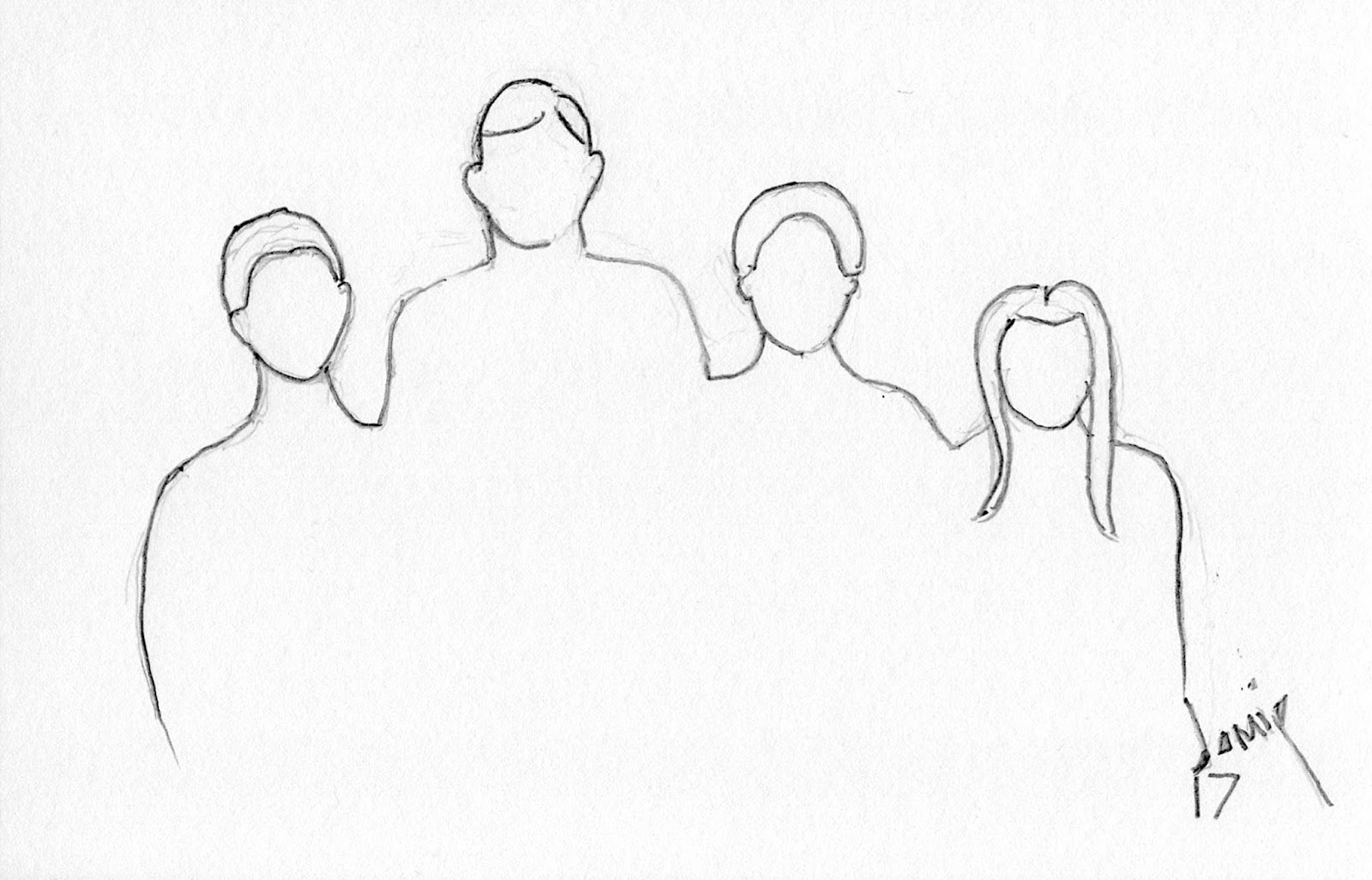
 Impression sketch: Innocent Spies. By Jamie

Liege - a Belgium city lying on river Meuse,
Where M'siuer Groneret a merchant shop
Keeper lived with wife and two daughters -
A well known family of Liege, whose head
Of house had influential status, was arrested.

Charges laid on Groneret were on grounds
Of spying - over 3 days the family underwent
A trial - while there had been no proof of given
Acts of espionage, this Belgium Groneret
Family under German held Liege, saw fate set.

The two young Groneret daughters, aged 14
And 20, after three days were transported,
Forced to stand beside a firing squad - the
Officer in charge ordered the soldiers to aim
And fire, executing the girl’s parents outright.

The officer approached the two stunned
Girls and forced them to stand where their
Father and mother lay dead - by their pools
Of blood, the German officer calmly looked 
Both girls in the eye and questioned them.

He said, 'tell me the names of your parents
Spying accomplices. If you tell me your
Lives will be spared, this I promise you.'
The youngest girl a moment later shook
Her head - her older sister gave her reply.

The young woman glared at the officer,
Her voice firm; 'If we speak we could
Cause fifty more people to be killed.
We would rather die alone.' The officer
Grabbed the young girl, pulling her aside.

With an indifferent voice the officer gave
The order to shoot the older girl - they
Aimed and fired and she fell dead over
Her mother and father - the distraught  
14 year old was forced to look on them.

All her family lay dead as the German
Officer promised her a pardon, but only
She gave the names of all her families
Accomplices - but the girl would not
Speak, believing she was to be shot.

Yet her fate was worsened as they
Began to torture her in unsaid ways,
Then given to the squad who were
Ordered to use her - finally broken
The Groneret girl found relief in death.

by Jamie Mann.

Anon.,1917. Quadruple Murder - Fresh German Atrocity. The Daily Telegraph, [online] 01 August 1917. P.5. Col.4. Available at: http://www.telegraph.co.uk/news/ww1-archive/12214747/Daily-Telegraph-August-1-1917.html [Accessed: 02 August 2017].

Mann, J., 2016. 100 years Ago - Poems by Jamie Mann. [letter] (Personal communication, 02 August 2017). 


#WW1 #WW1centenary #GreatWar #WW1poem #GreatWar #WW1centenary #worldwarone #worldwaroneremembered #WW1Belgium

Saturday, 17 January 2015

Poem ~ Charlie Sorley: Officer of Poetry - Sunday, 17 January 1915


Source: File: Charles Hamilton Sorley in military uniform.jpg, 2015. Charles Sorley, Wikipedia, the free encyclopedia. 17 January 1915. [online] Available at:<http://en.wikipedia.org/wiki/Charles_Sorley >[Accessed: 17 January 2015].
  
i  A Boy's Life

In Aberdeen of 1895 were born male twins,
William Ritchie Sorley and his elder brother,
Of some moments - Charles Hamilton Sorley. 

To Powis House, a mansion of the old town
Came this young family, with boys aged one -
A wild windy placed looking over the North
Sea - their home surrounded with fields,
Which were filled with the life of the wild -
And not so far away a station - for the boys
Led to mystery kingdoms down the tracks.

By age of five, now joined by a sister, the boys
Experienced another move - to Cambridge
Where their father was to become a university
Professor  - so the twins’ education began -
To centre on games of marching and singing.
Both in English and French - their sources,
Being the Pilgrims Progress and the Bible -
Along with ballads of Scott, Blake and bard
Of Shakespeare - all before a school career.

The older, Charlie Sorley, joined as a day boy,
At the King’s college choir school - happy
In everything - everywhere making adventures.
As twins, the boys looks and nature differed,
But a separation from his brother was uneasy;
For six weeks William fell ill with Scarlet Fever.

ii School Life

Aged 13 in 1908 Charlie gained a scholarship
With Marlborough College - separation again
Took him from William, then at another school.
Charlie by 1910 moved into the senior house,
Gaining delight in Alderley library - his resource.

This move Charlie had done with a friend
A boy who sadly, after a short illness, died.
Charlie was said to have taken this quietly.
With favoured runs across rain filled country,
He took solitary walks and to share in sports -
With iron views on right and wrong Charlie
Gave himself voluntary, for breaking of rules.

By December 1913 came yet another move
In education, with a scholarship for University
College Oxford – so Charlie agreed to leave
Marlborough early, an ending he would miss.

A habit for Charlie had been to write down
What was in his mind – early on this had been
In Forms of heroic verse, in a style of Scott –
The growing Charlie though, became reserved,
With his family knowing less of his activities.
  
Unknown to them he took part in a debating
Society  -making speeches and interactions
With the Malburian – the school magazine.
For a time his heroic verse tuned to shockers;
He told in dormitories within the dead of night.

Next in a move from lower to upper sixth,
Charlie gained leave to travel to Germany
First completing commitments to the Malburian
Preserving them for a family archive -Charlie
Sent batches of compositions to his mother,
On regular occasions, until June 1915.

iii  University Life

Now the twins were 19, when young Charlie,
On 20 January 1914, travelled away to Schmerin
In Mecklenberg – where he stayed with family
Of a lawyer – Charlie happily learned German,
And gained new friends  - with spring and April,
Charlie moved to Jena to become a university
Student - summer came in hot June, his family
Visited, for a stay in Jena and a tour of Thuringia.

During the Saturday evening of their weekend
Stay, Charlie led them through a town square -
Where men and women gathered about tables,
Under flared lights, with singing and drinking –
These people, who Charlie believed as having
Stupid expressions. The next day in climbing
A hill, they saw again such German habits.

They sat and looked across Jena - Charlie could
Not make out the German student who would
Spend two years in fighting, in folly drunkenness -
Only in the third year, did such students work -
To get though their exams - then with July 1914,
Came time for Charlie to trace his steps home.

A walking tour was planned, with a friend across
The Moselle valley, to join his brother William,
In Schwern  - in order to return home together
But this plan was never to happen - on Sunday
2 August, Charlie and friend were at Trier,
When suddenly arrested - to be placed in separate
Cells for a day – reasons for detainment given,
Due to their not wearing a hat – Charlie informed
The officer, such was a habit for people in Britain. 

Those long hours were relieved, by conversation,
With a soldier prisoner in the next cell - speaking
Through a knot hole while keeping awareness
Of the sentry – as tourists they were released,
And ordered to leave the country – so Charlie
Returned by way of Belgium – through Liege 
By train - as he drowsed on Monday afternoon,
Saw soldiers wearing waterloo hats on a platform.

By Brussels then Antwerp, Charlie shared
The problems of gaining passage homeward –
Finally to get aboard a boat, the British Consul
Had chartered - by 6 August Charlie made it home
Still hatless with a Jena beer mug and sandals.
  
iv Army Life

With hardly time to take any breath on 7 August,
Charlie applied to take an army commission,
With the university board of military studies –
Yet with nothing happening Charlie, in Oxford,
Made out another application to join up.

Charlie considered of joining as a private -
He believed to be 'the really heroic thing to do' -
When he found the Gazette displayed his name
For a new service battalion - the 7th Battalion
Of Suffolk Regiment - to be a second Lieutenant.

On that same day, came orders for him to report
At Churn, a training camp on the Berkshire Downs.
By third week of September he arrived At Shorncliffe
Situated above town of Folkstone - learning history
Of the 'Old Dozen' - his regiment with all its traditions.

Amid letters of 1915 - the date uncertain - yet written
In mid January - Lieutenant Charles Sorley wrote
From Shorncliffe, to say of alarming monotony,
Of his existence - how staleness affects the men
And officers alike - a reported lack of efficiency 
Meant they were unlikely to move for a time.
Days went swift but with nothing to show - living
For a future turned to the past - in habit of old men.

'War is chasm in time,' Charles defied the media's
Habit to claim 'war is ennobling purge' - only to cause
Unhappiness and lack of comforts - papers should
He felt, be muzzled - any illusion of war as splendour
Would need to be purged, after the end of the war.

Any leave was in abeyance, despite the inactivity -
He felt for his friend, with Oriel men mostly in khaki.
Charles made envy with his advantage of working
With his brain - his own felt stagnant - even any will
To learn French was absent - his mind stayed shut.

by Jamie Mann

 Anon., 1919. The Letters of Charles Sorley with a Chapter on Biography.
 Cambridge University Press.  Chapter 1 Biographical.


#WW1 #WW1centenary #GreatWar #WW1poem #GreatWar #ww1centenary #worldwarone #worldwaroneremembered
Wednesday, 13 August 2014

Poem ~ The Burning of Boncelles - Thursday, 13 August 1914


Around the city of Liege the fighting war continued.
In its wake fighting swallowed unsuspecting places.
Such one small Belgian town, Boncelles,
Was to have a dreadful fate...

The resting people of Boncelles had retired for the night
As Darkness fell, clouds darkened any sign of a moon
An unsuspecting people, were soon to be greatly disturbed.
In the quiet deserted streets boots began to tread and thud
Amid the darkened houses, came a Belgian officer,
An engineer, leading a quiet army of sappers who knocked
Urgently and ferociously on every door of every house.
A shaky people were summoned outdoors into darkness,
Where the engineering officer gave dreadful explanation,
For the town’s fort to operate guns without obstruction,
Every house Boncelles had to be cleared with no exception.
So it was each home was to be hurriedly burned down.

The fort had every authority in the destruction of houses.
But it was that during the day no warning had been given,
As the officer addressed the people the sappers began.
Under orders each soldier hurried into each house,
Carrying wood and petrol - to throw beneath the stairs,
Wood piled and then soaked with stench of petrol.
The Belgian soldier that conveyed this reality in a letter
To his brother in South Wales, to say how the English
Cannot grasp such horrors and tragedies of war
Unlike Belgium, having often been the battlefield of Europe.

This man, Waroquiers, at first hand saw the shock and grief
Of women and children. He states  ‘All they do is weep.’
At this painful time many went to the church to pray for hope.
Others begged the soldiers for time to gather furniture,
For what little they had – but taken firmly by the arm
They were led weeping outside as sappers pushed by.
By touch of torch, petrol ignited each house was soon ablaze.

A distraught woman tried to rush back inside for some photo,
Or other souvenir or precious object, but was ordered back
By the soldiers. As fires began the dark clouds of a dark sky,
Maybe in equal weeping of the people’s loss, began to pour.
Some rain dampened fires extinguished so the soldiers,
Striking rifle bayonets into petrol soaked cotton, hurried
To smash windows and reignite each waning house fire.
‘All they did was weep’ the soldier Waroquiers watched flames.

He saw how helpless men folk watched with wife and child.
One such man, in some strange stupor stepped aside
The burning of their home - then as if he had gone mad,
Rushed across to assist the soldiers in the burning down
Of homes. At his example others now took up torches.
By the midnight hour came the sound of the ringing bells
Of Boncelles church, where the people had been praying.

But now gathered wood piled high about alter, into the tower
Once lit dancing flames rocked the bells in dreadful fate,
Engulfing fire made climbed and danced towards the night.
Soon this aged tower crumbled and caved in a smoking heap.
With surrounding trees cut down around a burning town,
Boncelles, a place of home and life now laid to terrible waste.

It would seem destruction had given the enemy strange victory
So this tactic carried out now the fort’s guns had no obstruction,
All for the sake of Belgium guns.
Waroquiers had followed orders and assisted in the task
His eyes had watched the burning of his town as he promised,
‘I shall never forget the sight of it.’

by Jamie Mann


Anon., 1914. What War Means - Terrible Scenes in a Belgian Town. The Daily Telegraph, [online] 13 Aug. p.3. Col.6. Available at: http://www.telegraph.co.uk/news/ww1-archive/11025934/Daily-Telegraph-August-13-1914.html [Accessed: 13th August 2014].


Mann, J., 2014. 100 years Ago - Poems by Jamie Mann. [letter] (Personal communication, 13 August 2014). 


#WW1centenary #GreatWar #WW1 #WW1poem #GreatWar #ww1centenary #worldwarone #worldwaroneremembered  #BegiumWW1

Tuesday, 12 August 2014

Poem ~ Belgian Women Defend their Town - Wednesday, 12 August 1914


Out of Paris came a hopeful story,
Of such bravery and determination
By Belgian women, standing up in self-defence.
Lying between the cites of Verviers and Liege,
Nestles an almost insignificant town of Herstal.
Unremarkable perhaps, except for one advantage,
A Belgian flag flying over a factory of small arms.
With the town's men being called to the colours,
This town's population consisted of older men,
Women and their children.

Alerted to the fact of German army’s approach,
These women gathered together to take charge.
In making possession of their employers factory,
They now took up arms loading revolvers,
Rifles and any other weapons, they had made.
As the Uhlans approached this women’s army,
Opened rapid fire and back they drove the enemy
Back - until no ammunition was left.

After this they waited in their barricaded homes.
Silent, watching, waiting, quietly anticipating
Until the Germans marched down their streets
Who, in self-assurance of marked success,
Invaders realised too late as windows opened
And boiling water was poured and thrown
Upon their heads in scolding compromise.
Therefore upon the Friday the Belgian flag
Still flew over this Heroic Women’s self defence.


by Jamie Mann


Anon., 1914. Fight for a Factory. Heroic Women's Defence. The Daily Telegraph, [online] 12 Aug. p.6. Available at: http://www.telegraph.co.uk/news/ww1-archive/11025922/Daily-Telegraph-August-12-1914.html [Accessed: 12th August 2014].


Mann, J., 2014. 100 years Ago - Poems by Jamie Mann. [letter] (Personal communication, 12 August 2014). 

http://www.telegraph.co.uk/news/ww1-archive/11025922/Daily-Telegraph-August-12-1914.html


#WW1centenary #GreatWar #WW1 #WW1poem #GreatWar #ww1centenary #worldwarone #worldwaroneremembered #Herstal #Liege #BegiumWW1

Saturday, 9 August 2014

Poem ~ Two Plucky Ladies Sunday, 9 August 1914

Two ladies on a summer Belgium tour in the Ardennes,
Being quite unaware of any trouble or war pending,
Received one morning a concerned friend's telegram.
Warned of danger, they were advised to leave at once:
Deciding they should journey home soon as possible
These English ladies were soon to show their steel.

Finding their tram from Laroche halted by fallen trees,
They carried on foot for half mile to gain another tram
That carried these determined ladies to Melreux.
But then they found the rail bridge to Namur blown,
So to reach Liege our ladies had to go via Rivage.
Where panic and terror of Germans filled local people.
While being kindly sheltered for the night, our ladies
Were briefly considered as possible German spies.

Heeding advice to abandon their burden of luggage,
The cool endurance of these feisty English women
Found them setting on a long steady walk to Liege.
At Chanxhe a German gave the ladies brief attention.
Allowed to pass, they thankfully carried on to Poulseur,
To see a force of Germans Uhlans carrying out
An arrest of residents as spies. Witness to this scene
Our plucky ladies, (despite being closely watched),
Moved on across a broken road, ankle high in mud.

Their calm, daring was to flourish at the River Ourthe,
(If stopped they were advised to answer simple truth)
Here to find the long bridge under German control.
But on our ladies walked, quietly across the bridge,
Then firing begun about them coming from a high fort,
At which the Germans were keenly replying.
Despite the explosions and noise they carried on.
Diverted they were directed to a footpath by a canal,
And so onto Mery - despite the nearby gunshots.

Refreshed near Tilff our plucky ladies moved onwards,
Overtaking a group of walking Belgian women.
Until in a valley, where cattle were driven for safety,
A Belgian cyclist waved a flag and warned them
Of the road just ahead about to be destroyed -
But advised after the initial explosion they just might
With much luck, find some path or way across.
The Belgians fled but our determined plucky ladies,
Once the dust settled, saw the road partially destroyed.

Scrambling over large barricades of rolling stock,
They scaled flagpoles bound together with barbed wire.
With this successfully surmounted by our plucky ladies
Soon found the trains at Strenpas running to Liege.
Here they saw arrivals of wounded, where one man
Missing one arm waved a Belgium flag with the other.
In four suffocating hours they moved onto Brussels.
Finding the Gare du Nord was crowded with people,
And hotels had been given over to the wounded.
Subjecting all people to examination in case of spies
By Civic Guards; our ladies found Belgian’s wanting
For English help - Asking why they had not arrived?

Among all nationals on board the boat 'Marie Henriette'
Our ladies found they were to sail close to the coast.
With dull metal shapes of warships in the distance
Came challenges by a French then an English gunboat
After slow progress a powerful sweeping searchlight
Marked their safe arrival at Folkestone and England.
Still three more tedious dark hours slowly followed,
With all nationalities and residency closely checked.
Finally stepping onto a train to London arrived at 2am
No doubt exhausted our plucky ladies were relieved.

by Jamie Mann.


Anon., 1914. Leaving Belgium - English Ladies' Daring. The Daily Telegraph - Special Sunday Edition, [online] 9 Aug. p.2. Col.1. Available at: http://www.telegraph.co.uk/news/ww1-archive/11019837/Daily-Telegraph-August-9-1914.html [Accessed: 9th August 2014].

Mann, J., 2014. 100 years Ago - Poems by Jamie Mann. [letter] (Personal communication, 9 August 2014). 


http://www.telegraph.co.uk/news/ww1-archive/11019837/Daily-Telegraph-August-9-1914.html


#WW1centenary #GreatWar #WW1 #WW1poem #GreatWar #ww1centenary #worldwarone #worldwaroneremembered