Showing posts with label 1916_ 01. Show all posts

Sunday, 31 January 2016

Poem ~ Battle Cry - Monday, 31 January 1916


Impression sketch of German troops charging into a battle - by Jamie.  An original image can be seen at: <https://www.quora.com/Why-did-Germany-lose-in-World-War-I> Accessed: 29 January 2016].

A new fact from the frontline,
Had arrived via central Paris
news, regarding methods
As to how enemy attacked,
With Germanic battle cries.

The German soldier’s fury
Within the heat of battles
Had sounded their words,
'Deutchsland Ueber Allies!'
Or alternative cry of 'Hoch!'

But a new rallying cry came, 
To be shortened version of
'Hauptsache ist das England
Keile Kriegt!' to translate;
'England needs a thrashing.'

Building on this, an anagram
Formed the new word 'Hidekk!'

by Jamie Mann.

Anon.,1916. New Battle Cry - 'Hidekk, Hidekk!' The Daily Telegraph, [online] 31 January 1916. P.11. Col.3. Available http://www.telegraph.co.uk/news/ww1-archive/12120498/Daily-Telegraph-January-31-1916.html [Accessed: 30 January 2016].

Mann, J., 2016. 100 years Ago - Poems by Jamie Mann. [letter] (Personal communication, 31 January 2016). 


#WW1 #WW1centenary #GreatWar #WW1poem #GreatWar #WW1centenary #worldwarone #worldwaroneremembered #WW1Germany

Thursday, 28 January 2016

Poem ~ Lady Spy Ring Breaker - Friday, 28 January 1916


Impression sketch of French Woman overhearing German Spies - by Jamie.

A woman from social divisions
Of petite bourgeois, lived in Paris.

The terms usage in the context
Of its time, likely consciously
Derogative - described one lady
With connections of North East
France, living in Paris capital
To connect to a story of spies.

This lady of some ordinary
Class was a regular traveller
Of Parisian underground metro -
The French capital being well
Populated by military both
French and English soldiers.

Having herself no knowledge
Of English, she had observed
Two uniformed officers - both
Men whom she found very
Handsome - to listen closely,
To hear only German tones.

As the train progressed they
Talked, sometimes louder -
To sound like German words -
When at one station a heavy
Man trod on the toes of one
Officer to give a German oath.

The train came to the station
Of Etoile - by then intrigued,
The woman followed the two
British officers. They walked
To Porte Maillot and entered
A low class lodging house.

With her suspicions raised
By officers language and
Shared behavior, she noted
The address - she sought
Out a policeman, who could
Do nothing but give advice.

The lady took her suspicions
To nearby police commissary,
Reporting her observations
Of German voices in British
Uniforms - with this done
The woman heard no more.

Later in mid January 1916
A letter fell through her
Door - the signature made
By a high official from
French military authorities' -
Enclosing 3000 francs.

The official letter stated,
From her given information,
That those British officers,
Were in fact two leading
Spies then captured - this
Petite bourgeois’ felt pride.

Pleased both for her service

To war and sudden wealth.

by Jamie Mann.

Anon.,1916. Spies Captured in Paris - Supposed British Officers. The Daily Telegraph, [online] 27 January 1916. P.10. Col.1. Available at http://www.telegraph.co.uk/news/ww1-archive/12120440/Daily-Telegraph-January-27-1916.html [Accessed: 28 January 2016].

Mann, J., 2016. 100 years Ago - Poems by Jamie Mann. [letter] (Personal communication, 28 January 2016). 


#WW1 #WW1centenary #GreatWar #WW1poem #GreatWar #WW1centenary #worldwarone #worldwaroneremembered #WW1Paris

Tuesday, 26 January 2016

Poem ~ Turkish Tunnel War - Wednesday, 26 January 1916

Impression sketch of British Officer in Turkish Tunnel - by Jamie. See original at:

i
An article by way of Australia’s
High Commissioner, was penned
By Captain Bean - an official
From the Dardanelles, for press
With the imperial Forces.

With the retreat from Turkish
Land having taken place, stories
Still emerged to tell experiences -
As those of the 24th Australian
Battalion in a tunnel's discovery.

Along with 23 Battalion men,
An officer and Engineer's
Corporal they entered entrance
To an underground passageway,
At a distance behind Turk's lines.

In an air of joviality they took
To hand and knees, crawling
Underground - to see where
The tunnels led, the officer
Turned into a slanting tunnel.

In the light at the end of that
Tunnel, was seated a Turkish
Sentry - his rifle aimed down
The hole - this officer froze,
To believe he had been seen.

A foot held mid-air, this officer
Held his pipe clenched tightly
Between gritted teeth; the sentry
Sighed and leaned gently back -
The officer was safe in darkness.

Moving on, the Anzac found
Another opening and guard -
This time the more confident
Officer, closer then peered out
Seeing Turkish guards talking.

Withdrawing by a backwards
Slow shuffle, the Australian
Left that sentry - in their return
They blew Turkish barricade
And sentry high into fresh air.

ii
2nd Australian Division
Fought their battles below
Ground, in pitch darkness -
The division of diggers
Digging into other tunnels.

Armed with their picks,
They broke into Turkish
Spaces - through the gap
A candle might be seen,
Held by Turkish diggers.

In claustrophobic fights,
As shots flashed in the dark
Of underground warrens -
Until possession between
Sides were finally settled.

With hand to hand fights
In tunnel against tunnel -
They crossed side by side
To intersect with frantic
Turk and Anzac reactions.

In the early days of arrival
A New Zealand situation,
Of machine gunnery called
Quinn's Post, was situated
On the top of the valley.

Quinn's Post in the dense
Scrub, turned into a churned
Field from actions beneath -
Where fifty Anzac mines blew,
Along with ten Turks mines.

Quinn's Post lay to bitter end,
Among relics of broken timber,
Like rotten teeth, amid earthy
Clods - while craters cut across
What had once been trenches.

by Jamie Mann.

Anon.,1916. Epic Of Anzac - 'Tunnel Against Tunnel'. The Daily Telegraph, [online] 25 January 1916. P.12. Col.3. Available at http://www.telegraph.co.uk/news/ww1-archive/12111105/Daily-Telegraph-January-25-1916.html [Accessed: 25 January 2016].

Mann, J., 2016. 100 years Ago - Poems by Jamie Mann. [letter] (Personal communication, 25 January 2016). 


#WW1 #WW1centenary #GreatWar #WW1poem #GreatWar #WW1centenary #worldwarone #worldwaroneremembered #WW1Gallipoli

Monday, 25 January 2016

Poem ~ Lady Machine Gunner - Tuesday, 25 January 1916

Source: File: Burroughs Adding Machine Advert - Machine-Guns In The Office.jpg. [online] see an original image P3 col 6-7 at: <http://www.telegraph.co.uk/news/ww1-archive/12111105/Daily-Telegraph-January-25-1916.html> Accessed: 23 January 2016].

A curious conjecture came by way
Of a young lady seated at a desk,
Where quill and ink sits next
To scattered papers - the lady shelters
Besides piled ledgers.

The shock of a suggestion is how
The young lady calmly operates
An 'office-type' machine gun -
Down the barrel she aims, as smoke
Emits metaphorical bullets.

The lesson begins by stating,
How that many men armed
With rifles are equaled by
One man operating a machine gun;
So few men can hold trenches.

While not exactly aiming at a boss,
The lady illustrates how use
Of innovations, may overcome
Shortages in the workforce - equal
To a skeleton armies strength.

Clerks are office infantrymen,
While the 'machine gun'
They handle, is a Burroughs
Adding Machine - lady, boy or man
Can do the work of three.

The advantages of technology,
Is how a machine can never
Be off colour from a heavy
Night - the adding machine can carry
On all day, without any flicker.

Versatility is a proclamation,
To say it is a cost keeper,
Statician, bookkeeper -
To be a complete mechanical
Accountant in any office.

The great ability of the wonder
Machine is as record maker,
Adding multiple columns
In various denominations, in ability
To analyse, tabulate and index.

Promises continue, as it records
Abstract and make sub totals -
Giving quantities and amounts,
Excluded from the total, if so wished -
To print out many carbon copies.

With the hard sell is the lady
That rattles out bullets
Efficiently - just 30 minutes
Is the claim to illustrate Burroughs
Machine to any office employer.

Comes an invite right away,
To send that same day,
A booklet of information,
That can bridge the gaps in low staff,
And turn one clerk into three.

by Jamie Mann.

Anon.,1916. Advert- Machine Guns In The Office. The Daily Telegraph, [online] 25 January 1916. P.3. Col.6-7. Available at http://www.telegraph.co.uk/news/ww1-archive/12111105/Daily-Telegraph-January-25-1916.html [Accessed: 25 January 2016].

Mann, J., 2016. 100 years Ago - Poems by Jamie Mann. [letter] (Personal communication, 25 January 2016). 


#WW1 #WW1centenary #GreatWar #WW1poem #GreatWar #WW1centenary #worldwarone #worldwaroneremembered #WW1Britain

Sunday, 24 January 2016

Poem ~ An Army Marches On Its Boots - Monday, 24 January 1916

Impression sketch: boots and puttees - by Jamie. See original at:
http://www.bbc.co.uk/news/uk-england-25879184

In creating uniformity and solidity,
For every able bodied man to fight
Was the fundamental needs for boots -
From the centre of the British
Shoe industry, Northamptonshire
Proved ability to step up to the mark.

Shoe leather supplies had
Provided from the break of war
Needs for up to five armies
Together with British and French
Were Serbian, Belgium - along
With Italian armies boot needs.

The British style army boot
Alone, would rack up on
A normal week, pairs to be worth
£325,000 - to peak £400,000
During the busiest of weeks -
All built to an Empires designs.

Overcoming a pre-war slump,
The industry set to make up
Field service knees boots -
Then with Marines marching boots,
Gurkhas short-footed boots or sailors
Thigh boots, a man might float in.

Furthermore were flying Corps
Boots, sandals for West African
Soldiers; then there were felt soled
Powder magazine boots and special
Issue, designed for those tropical
Countries needing Mosquito boots.

These latter issue for soldiers
Destined for tropical climes,
Had been ordered one Saturday,
To be shipped by the Tuesday -
Barely 4 days for a company who
Before had never heard of them.

Designed and patterns cut out by
Evening of day one, so that Sunday
The shoe factory ran at full steam -
For the boots were ready on rails
By Monday, prepared to be taken
To the transport boat on Tuesday.

Another army of the Russian type
Was on the cards for high legged
Boots, to number three million -
To push demands on industry
30,000,000 feet of upper leather
And soles numbers of 250,000.

In terms of sole leather 'bends'
Would number 250,000, while repair
Bends could add up to 200,000 -
With additions of hides of 300,000 -
Such would be demands of the
Russian Army’s high-legged boots.

Recounted as the most challenging
Of boots were those for Italians,
In designs demanding toe cases,
Like those of football boots -
Made with insistence of certain nails
Used, to raise demand of  £20 a ton.

Boom time had returned to county
Of Northamptonshire - with such
Numbers being used since 1914,
What figures might then be reached,
By wars finish, with a call for sturdiest
Thick-soled, hob nailed army boots.

by Jamie Mann.

Anon.,1916. Boots For Five Armies - Northamptonshire's Output. The Daily Telegraph, [online] 21 January 1916. P.5. Col.5. Available at http://www.telegraph.co.uk/news/ww1-archive/12108578/Daily-Telegraph-January-24-1916.html [Accessed: 22 January 2016].

Mann, J., 2016. 100 years Ago - Poems by Jamie Mann. [letter] (Personal communication, 22 January 2016). 


#WW1 #WW1centenary #GreatWar #WW1poem #GreatWar #WW1centenary #worldwarone #worldwaroneremembered #WW1Northampton

Saturday, 23 January 2016

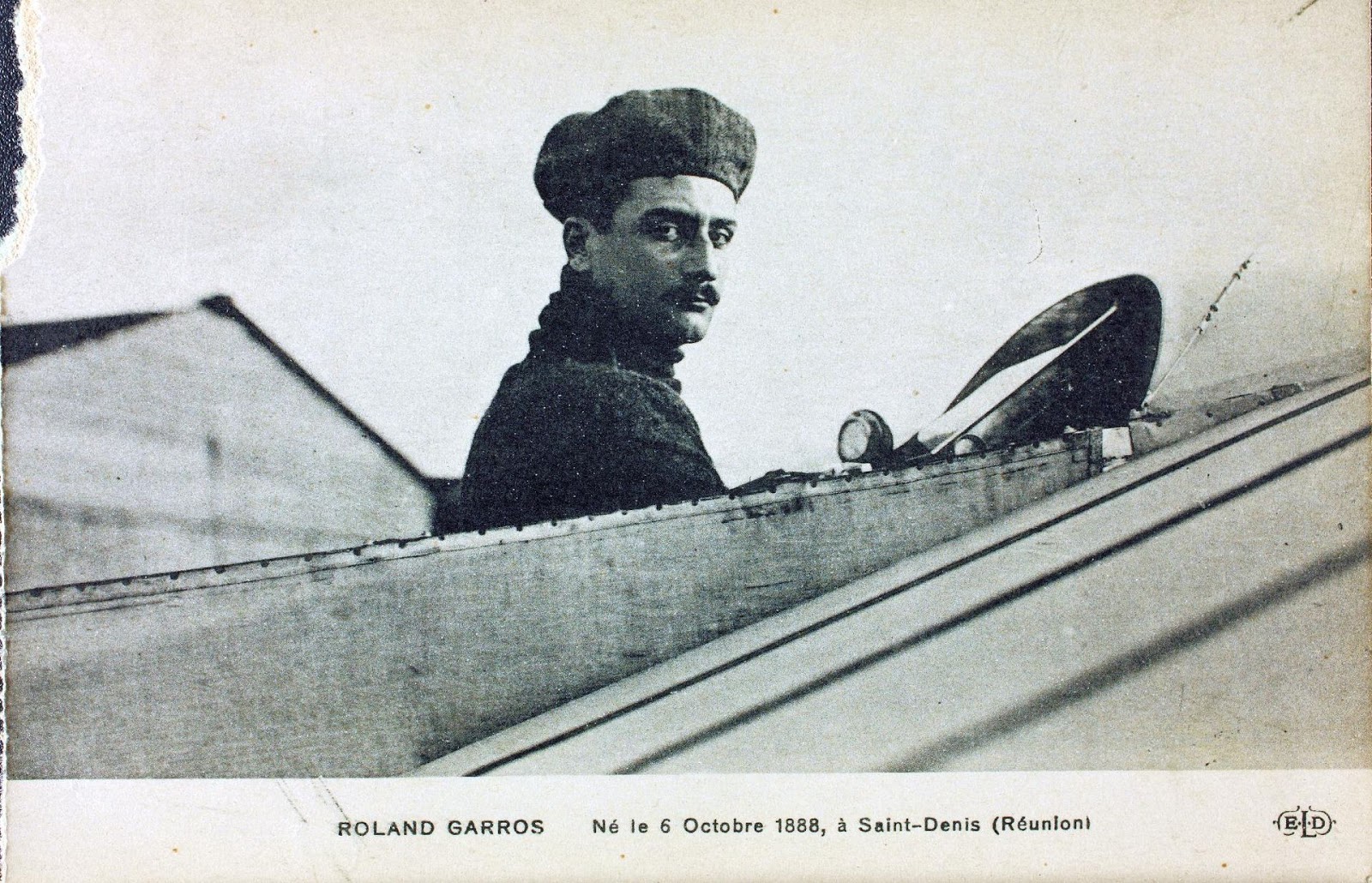
Poem ~ A. Fokkers Machine Gun - Sunday, 23 January 1916


Source: File: Pilot Roland Garros.jpg. [online] see an original image at: <https://en.wikipedia.org/wiki/File:Roland_Garros_%28aviator%29.jpg> Accessed: 23 January 2016].

Impression sketch of Anthony Herman Gerard Fokker - by Jamie.

While the Fokker types had been fighting
The skies for some time already,
It came to be heard in the French British
Headquarters, of Berlin's jubilations
For the latest Fokker Type's success.

From the early days of observer crafts,
To the types on both sides to drop
Bombs on their opponent’s soil, restless
Innovations went stages further,
Adding machinery of mounted guns.

While there had been varying successes,
A big step had been made by French -
No April's Fool, Roland Garros took to sky
1 April 1915 - to pilot his aircraft,
Fitted with a specialist machine gun.

Armor plating had been fitted to the lower
Blades, added to deflect any bullets
Most likely to damage spinning propellers -
This success led to five kills;
In a short time Garros became an ace.

Within twenty days pilot Garros' craft
Was taken down behind enemy
Lines - German aircraft builder Anthony
Fokker was under rapid orders,
To replicate the French gun's ability.

Overcoming the Frenchman's rudimentary
Methods, to allow propeller's action
To take control of the firing mechanism -
The bullets would fly through
Gaps of the spinning aircraft blades.

The skeptic Generals saw the success
Of a demonstration, to order
Fokker to take to the sky in a practical
Test - when on targeting a French
Plane Fokker declined to make a kill.

Fokker the engineer was not a killer -
To tell the Generals they would
Have to take that step - this they did
As a German pilot proved
The effectiveness of gun's success.

This fact soon became obvious
To those of the allied crafts -
As the numbers of Fokkers being
Responsible for downing
Allies - seen as temporary advantage.

In order to influence allied optimism,
Given opposition of enemy
Purposes, who faced allied spirits -
To send ten British planes 
For every German who ventured close.

Temporary Fokkers successes lay 
Under the banner of what 
was in preparation - that revelations
Would be soon flying out
From Britain's upcoming surprises. 

by Jamie Mann.

Anon.,1916. Air Fights In France - Britain's Coming 'Surprises'. The Daily Telegraph, [online] 22 January 1916. P.10. Col.5. Available at http://www.telegraph.co.uk/news/ww1-archive/12108572/Daily-Telegraph-January-22-1916.html [Accessed: 22 January 2016].

Mann, J., 2016. 100 years Ago - Poems by Jamie Mann. [letter] (Personal communication, 22 January 2016). 


#WW1 #WW1centenary #GreatWar #WW1poem #GreatWar #WW1centenary #worldwarone #worldwaroneremembered #WW1Germany

Monday, 18 January 2016

Poem ~ The Guilt of Hyman Coots - Tuesday, 18 January 1916


Impression sketch of Hyman Coots selling forged military passes - by Jamie.

The final trial of fraudster Hyman Coots,
Took place 17 January 1915.
The Monday Marlborough Street Police
Court deciding the case
Of the Russian Jew, a cinematograph actor.

Hyman Coots aged 18, gave his address
Of Lorne Road, Brixton,
In Lambeth, a Borough of South London -
The charge was forging
Military passes and encourage desertion.

In an operation to capture the fraudster,
Three men followed
Orders of Canadian Military Police -
Private Alfred Allen
And two Sergeants, went to his address.

Hyman Coots supplied two military
Leave passes, in exchange
For money from the Sergeants, while
Providing civilian clothes
To Allen in suggesting his desertion.

Head of the military Police Assistant
Provost Marshall,
Captain Hewitt, while taking the case
To the court had left
The final outcome to the magistrate.

With the two charges made before
The court, Mr Denman
Presiding, believed the prosecutions
Leniency was down
To the prisoner's youth of 18 years.

One outcome could have been taken
Further, to a trial to lead
To a long term of penal servitude -
Instead the decision
Was to be a six months sentence.

These would be for each charge
To run side by side
Resulting in a year’s detainment -
Hyman Coots said
In his drug habit he was oblivious
To what he had done.

by Jamie Mann.

Anon.,1916. Deserter Decoy Sentenced. The Daily Telegraph, [online] 17 January 1916. P.12. Col.4. Available at: http://www.telegraph.co.uk/news/ww1-archive/12093336/Daily-Telegraph-January-18-1916.html [Accessed: 17 January 2016].

Mann, J., 2016. 100 years Ago - Poems by Jamie Mann. [letter] (Personal communication, 17 January 2016). 


#WW1 #WW1centenary #GreatWar #WW1poem #GreatWar #WW1centenary #worldwarone #worldwaroneremembered #WW1Homefront