Showing posts with label German Aircraft. Show all posts

Sunday, 6 August 2017

Poem ~ Fighting Above The Mud, Monday 6 August 1917 - Wednesday 8 August 1917


Source: File: German Aerodrome. See an original image at: <http://www.earlyaeroplanes.com/archive/image5/GermanAerodromes.jpg> [Accessed 06 August 2017]

Winter in August enshrouded
In dankness; an army dug in as well
As they could into a swampland.
Vile Flemish weather created
Glutinous mud; shell holes as ponds.

As insects in a ploughed field
Walking wounded made their way as
Best they could, trying to avoid
Shelling arriving at clearing
Stations, as weary figures of mud. 

The foulest of weather was not
Confined to ground, where in the air
The forces of aircraft did not
Hesitate to take part over
Enemy territory to create havoc.

31 July saw keen embarkation
Of eager airmen to add their part,
Swooping low over marching
Heads of enemy to scatter
Them, or taking bombs to camps.

These airmen often flying low
At tree height - as one air pilot did
Till coming to an aerodrome.
He targeted the hangers - those
On ground initially saw him as own.

Then a bomb hit the first hanger
Causing panic, whilst he swooped
To the open doors firing inside -
Lifting, soaring to the second
Shed to provide a gift of a bomb.

A third hanger took another
Bomb; a delay in the handle's action
Sent fourth bomb onto ground
Near to a railway siding, close
To a train - the Germans took aim.

They fired at the English
Plane but the pilot undeterred led
Straight into them in return
Of fire, to scatter them about -
At 20ft to target the sheds again.

Firing last of his bullets the pilot
Lifted away to a cloud. With renewed
Ammunition this aerodrome
Saw the return of the flyer so
Low to skim the ground again,
Firing into hangers on mechanics.

Having left that aerodrome
In disarray, the English pilot came
Across two German officers
On horseback, to dive low
Over their heads; the horses bolted.

Further along from a height
the pilot swooped to a marching
German column, letting loose
Fire In their midst, they scattered
To seek safety in ditch and hedge.

Having used all ammunition
The pilot retreated to fix a third
Drum - he emerged from
Cloud to discover German
Craft in pursuit in ariel battle.

In evasive action and
Reaction the three fought briefly,
Until in pursuit a German
Crashed to ground to see
A German crowd gather round.

Without hesitation he turned
Again and targeted the crowd.
The British pilot left them
To encounter a civil train
Finishing bullets returned to base.

by Jamie Mann.

Gibb.P,1917. Heroic Airman In The Battle Of Flanders -Amazing Exploits. The Daily Telegraph, [online] 03 August 1917. P.5. Col.5-6. Available at: http://www.telegraph.co.uk/news/ww1-archive/12214748/Daily-Telegraph-August-3-1917.html [Accessed: 06 August 2017].

Mann, J., 2016. 100 years Ago - Poems by Jamie Mann. [letter] (Personal communication, 06 August 2017). 


#WW1 #WW1centenary #GreatWar #WW1poem #GreatWar #WW1centenary #worldwarone #worldwaroneremembered #WW1Belgium 

Monday, 31 July 2017

Poem ~ Paris Attacks - Tuesday, 31 July 1917

Source: File: From Geographical Imaginations: Is Paris Burning? A look-out man operates a portable siren above the city. See an original image at: <https://geographicalimaginations.com/2012/10/20/is-paris-burning/> 
[Accessed 31 July 2017]

Within war comes propaganda;
Opposing sides give denial
Of what the other side says.

Arial activity over the capital
Of France, found multiple
German bombing air raids.

As a precaution army of Paris
Firemen warned the people
Of enemy crafts approaching.

Weird, unusual sounds stirred
Paris, as firemen on roofs blew
On bugles or sounded sirens.

Above air raid alarms French
Air craft took flight over city,
In a darkening, melting sky.

Ground and sky became
As one - deep darkness cut
By beams of searchlights.

German official reports told
Of railways targeted in Paris,
To hit their mark with damage.

By Saturday, French replies
Made denial - that enemy
Planes had left no destruction.

Neither material loss nor loss
Of life - wireless messages
Were received by Admiralty.

Yet Parisian military bases
And railways were hit, with
German pilots safely returned.

Sunday July 29th, a Journal
Told of a suburban air raid
To describe damages done.

One store of combustibles
had been hit - also a factory
Yard, to leave small effects.

Two more fell appropriately
Into gutters, while shell havoc
Hit beds of innocent cauliflowers.

Any resulting explosions
Lacked involved descriptions,
As another bomb hit a centre.

Noted as important, maybe
Military, one turret exploded;
Being close to civilian houses.

The blast blew out material
To injure a single sleeping lady -
More bombs harmlessly fell.

Some hit one large enclosure,
With three in a boulevard -
Another damaged flowerbeds.

Sunday 29 July saw repeat.
30 minutes after midnight
Came the sounds of bugles.

Firemen called reveille and
Again set sirens loud across
Sleepy Paris, all as a caution.

Readied French squadrons
Took action to flight; reportedly
Sending enemy backwards.

News via Petit Journal, from
Versailles said bombs exploded,
All lost in the open countryside.

by Jamie Mann.

Anon.,1917. Bombs On Paris - No Victims Or Damage. The Daily Telegraph, [online] 30 July 1917. P.4. Col.6. Available at: http://www.telegraph.co.uk/news/ww1-archive/12214740/Daily-Telegraph-July-30-1917.html [Accessed: 31 July 2017].

Mann, J., 2016. 100 years Ago - Poems by Jamie Mann. [letter] (Personal communication, 31 July 2017). 


#WW1 #WW1centenary #GreatWar #WW1poem #GreatWar #WW1centenary #worldwarone #worldwaroneremembered #WW1Paris

Monday, 4 April 2016

Poem ~ Swiss Bombed - Tuesday, 4 April 1916

Impression sketch of Cartoon showing Germans dropping bombs on Porrentruy, Switzerland - by Jamie. From an original image that can be seen at: <http://aetdebesancon.blog.lemonde.fr/2016/04/04/cinq-bombes-sur-porrentruy/> [Accessed: 3 April 2016] 

An enforced pressured conversation
Occurred, between Swiss Federal
Council and Imperial German
Government, over an incident.

31 March 1916, German aviators
Dropped a number of bombs
Onto Porrentruy - a village
Of neutral Switzerland.

Extolling apologies, the German
Government gave explanation
That the aviators had totally
Lost their flight bearings.

The German aviators believed
They were still over French
Soil - that Belfort, a border
Town, was directly below.

In fact, Germans were 40 km away,
Flying over Swiss border village
Porrentruy - where five bombs
Caused civilian casualties.

The act had happened with two
German aircrafts over Swiss
Jura - where sub alpine was
A state mountain range.

The situation fell under canton
Of Bern's administration, that
Held a sympathetic union
With the French Swiss.

With close held French ties, this
Prompted solid anti German
Feelings; from the actions
Of five bombs on Swiss.

The incident was then reported
In the Petit Comtois - whose
Reporter quoted locals, as
Saying this was no error.

Whereas the French towns were
Under Curfews, Porrentruy had
No such light restrictions and
Belfort was the larger town.

As a country, Switzerland kept up
Stand of their armed neutrality -
Having arms only in purposes
Of self-protection defence.

Ready for insurgence from any
Other nation, the Swiss army
Manned all borders; against
Spilling over of trench war.

In this incident Government
Of Germany extolled deep
Regret - that the aviators
Would be punished.

Further they prompted suggestion
That some visible demarcation
Of the frontier may be made,
To prevent other repeats.

by Jamie Mann.

Anon.,1916. Bombs On Swiss Town - German Apologies. The Daily Telegraph, [online] 3 April 1916. P.6. Col.1. Available at: <http://www.telegraph.co.uk/news/ww1-archive/12206737/Daily-Telegraph-April-4-1916.html>  [Accessed: 4 April 2016].

Mann, J., 2016. 100 years Ago - Poems by Jamie Mann. [letter] (Personal communication, 4 April 2016). 


#WW1 #WW1centenary #GreatWar #WW1poem #GreatWar #WW1centenary #worldwarone #worldwaroneremembered #WW1Switzerland

Monday, 21 March 2016

Poem ~ Dover Air Raid Deaths - Tuesday, 21 March 1916


Impression sketch of Edith Stoker and Francis Hall - by Jamie. Original images can be seen at : <http://www.doverwarmemorialproject.org.uk/casualtyindex.htm> [Accessed: 21March 2016]

i
With a maritime history and position,
The port of Dover had always been
Central to England’s defences - across
Time and wars, to look across the sea.

Seated at an extreme position at foot
Of south East England, where land
Once linked to an ancient world - long
Fallen to sea, forming a lone island.

There, where white cliffs formed Albion
In the county of Kent, channel waters
Made a natural defence to ambitious
Invaders - making Dover a prime target.

A prime port as link for Empires troops
In embarkation and arrivals, to be where
First bomb of 1914 fell on English soil;
Close to Dover castle, Christmas Eve.

A dirty white wall of chalky earth defiantly
Stood, formed a bright landmark guide
To hunters of new warfare, from winged
Crafts and the deadly zeppelin types.

ii
19 March 1916, being any normal day
saw strategy of a German bombing raid,
As life for the ordinary folk unraveled
In the light of a Sunday, given to rest.

Above a blue Dover sky buzzed aircraft
Tracing the chalk cliffs to find its target -
With Dover’s military and naval presence,
A bomb was thrown amid civilian houses.

Inside homes the sounds of flying craft
Alerted helpers, who carried a bedridden
Lady of 80, to safety of ground, as bricks
And mortar shook - her bedroom blew up.

As an invader swooped another bomb
Struck in destruction, killing a woman
Outright - the force of the explosion
Injuring another woman next door.

Elsewhere unaware of any imminent 
Danger A young Edith Stoker, out on
A free Sunday afternoon, took to her
Bike, setting off towards to Folkestone.

iii
Edith Stokes housemaid of Mrs Hart
Of Maison Dieu Road cycled, to turn
Around a corner of the main road,
To know soon she would see her love.

Having left her employer's house,
Edith rode onto Folkstone Road -
Moving over the railway, she moved
About a boy walking in the street.

Startled both looked up at the sudden
Screech - Edith clasping handlebars,
As a bomb crashed to the tramlines
The blast lifted her from the cycle.

Flying sideways across the road,
Edith struck the door of 131 -
The stationer’s shop of Mr Tarrant,
Where she lay in the entrance.

One minute from Folkstone Road,
Winchelsea Street was home
To Francis Amos Hall - he closed
The gate of number 23 on his way.

iV
That day his father, working as
A railway guard, had left on London
Train - his mother stayed home while
Francis walked to Sunday School.

With a year to his twelfth birthday,
Francis walked along Folkestone
Road, he stopped at sounds above;
A biplane swooped across the town.

At 23 Winchelsea Street, Mrs Hall
Heard the noise of aircraft overhead,
With her son outside, she rushed
To the road intending to find him.

Frances ran back over the tramlines
As girl on a cycle swerved round him -
Startled, Francis heard a rushing noise,
A bomb was falling - he turned to run.

Mrs Hall was close to Folkestone road,
As she saw her boy running towards
Her and home - then came a flash as
An air bomb struck, close to Francis.

V
Nearby a gentleman ran over to help,
Where he saw the distressed mother
of a fallen boy - He knelt to see brief
Reactions in his eyes, moving once.

The stranger felt him slump but said
Nothing - nearby a young woman was
Found injured in a shop door, both
Driven to the hospital full of casualties.

From her severe injuries Edith Stoker
Died aged 23 - a daughter of a Sergeant 
Major Pensioner - born in Singapore,
Until Dover became the family home.

In finally learning that her son had died,
Mrs Hall was comforted by staff, 'as best
They could' - on his return home Mr Hall
Found unwashed blood on his son's face.

by Jamie Mann.

Anon.,1916. Blown Across A Road. The Daily Telegraph, [online] 21 March 1916. P.9. Col.6. Available at: http://www.telegraph.co.uk/news/ww1-archive/12196087/Daily-Telegraph-March-21-1916.html [Accessed: 21 March 2016].

Mann, J., 2016. 100 years Ago - Poems by Jamie Mann. [letter] (Personal communication, 21 March 2016). 


#WW1 #WW1centenary #WW1poem #GreatWar #WW1centenary #worldwarone #worldwaroneremembered #WW1Dover

Saturday, 23 January 2016

Poem ~ A. Fokkers Machine Gun - Sunday, 23 January 1916


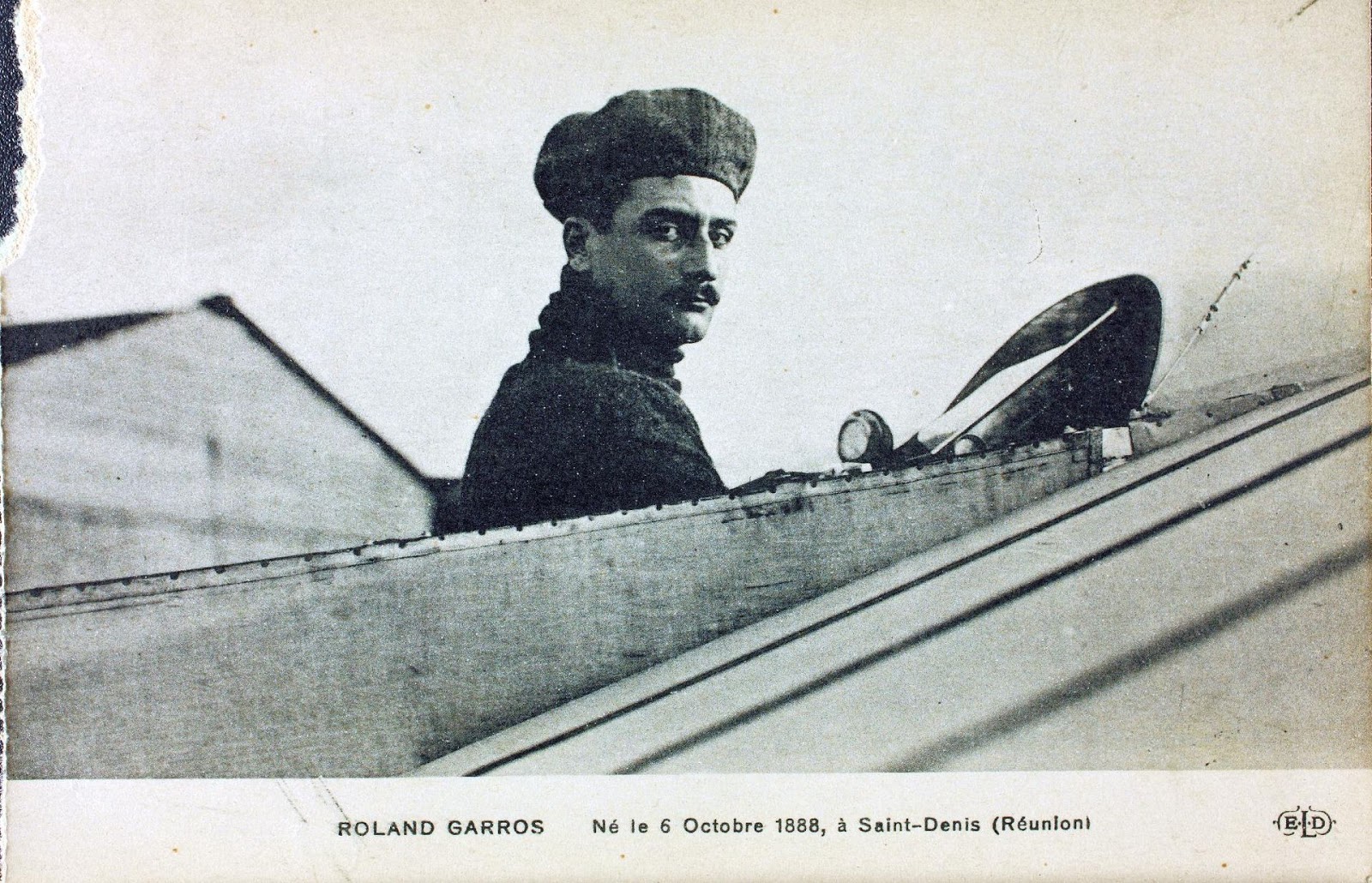
Source: File: Pilot Roland Garros.jpg. [online] see an original image at: <https://en.wikipedia.org/wiki/File:Roland_Garros_%28aviator%29.jpg> Accessed: 23 January 2016].

Impression sketch of Anthony Herman Gerard Fokker - by Jamie.

While the Fokker types had been fighting
The skies for some time already,
It came to be heard in the French British
Headquarters, of Berlin's jubilations
For the latest Fokker Type's success.

From the early days of observer crafts,
To the types on both sides to drop
Bombs on their opponent’s soil, restless
Innovations went stages further,
Adding machinery of mounted guns.

While there had been varying successes,
A big step had been made by French -
No April's Fool, Roland Garros took to sky
1 April 1915 - to pilot his aircraft,
Fitted with a specialist machine gun.

Armor plating had been fitted to the lower
Blades, added to deflect any bullets
Most likely to damage spinning propellers -
This success led to five kills;
In a short time Garros became an ace.

Within twenty days pilot Garros' craft
Was taken down behind enemy
Lines - German aircraft builder Anthony
Fokker was under rapid orders,
To replicate the French gun's ability.

Overcoming the Frenchman's rudimentary
Methods, to allow propeller's action
To take control of the firing mechanism -
The bullets would fly through
Gaps of the spinning aircraft blades.

The skeptic Generals saw the success
Of a demonstration, to order
Fokker to take to the sky in a practical
Test - when on targeting a French
Plane Fokker declined to make a kill.

Fokker the engineer was not a killer -
To tell the Generals they would
Have to take that step - this they did
As a German pilot proved
The effectiveness of gun's success.

This fact soon became obvious
To those of the allied crafts -
As the numbers of Fokkers being
Responsible for downing
Allies - seen as temporary advantage.

In order to influence allied optimism,
Given opposition of enemy
Purposes, who faced allied spirits -
To send ten British planes 
For every German who ventured close.

Temporary Fokkers successes lay 
Under the banner of what 
was in preparation - that revelations
Would be soon flying out
From Britain's upcoming surprises. 

by Jamie Mann.

Anon.,1916. Air Fights In France - Britain's Coming 'Surprises'. The Daily Telegraph, [online] 22 January 1916. P.10. Col.5. Available at http://www.telegraph.co.uk/news/ww1-archive/12108572/Daily-Telegraph-January-22-1916.html [Accessed: 22 January 2016].

Mann, J., 2016. 100 years Ago - Poems by Jamie Mann. [letter] (Personal communication, 22 January 2016). 


#WW1 #WW1centenary #GreatWar #WW1poem #GreatWar #WW1centenary #worldwarone #worldwaroneremembered #WW1Germany

Friday, 15 January 2016

Poem ~ In The Lap of a Dead Man - Saturday, 15 January 1916

Impression sketch of Flying Corps Officer crawling to pilots seat - by Jamie.

With the fearless nature of youth,
That has a tendency to try
Anything new - were proof
Of right stuff for the Flying Corps.

Such were the type as those two
That took off on a course -
At 10,000 feet into danger
Of airspace to encounter enemy.

One young flying Corps officer
Returned a letter home,
To tell of both their fates,
As they flew in clouds to fight.

In the front seat of the aircraft,
An officer led challenge,
As two German planes
Opened up gunnery at them.

The fight reached a stage, when
The burst of a shell close by,
Shook the craft - shrapnel
Burst through the air past him.

Within five, ten, twenty seconds,
The craft fell, twisting
Down to five thousand
Feet, the craft rocked as he looked.

The young pilot Barnaby, aged 19,
Was dead from shrapnel -
The only thing he could do
Was to reach the controls behind.

In the swaying air he made a move,
And climbed to sit on dead
Barnaby’s lap to pull controls,
Levelling out of that death plunge.

Cutting out the engine the officer
Guided the craft to ground -
Knowing Barnaby's death
At 10,000 feet, gave him time to act.

Admitting to his shock, the officer
Told how he forget virtually
Everything over two days -
When captured in December 1915.

Such can be the brazenness of youth
To approach game combat
As a sport - to meet victorious
To shake hands in fight's conclusion.

In meeting the English speaking
German, he learned how
His machine gun forced
Him down - having shot petrol tank.

By mutual English acquaintance,
Two German officers,
Gave him champagne
And dinner of oysters, in civil irony.

From honour among pilots, perhaps
Knowing shared dangers -
He arrived at a prisoner
Of war camp to share with officers.

The observer concluded to say how
Playing tennis and hockey,
With eight English officers
Helped cure shock; being well treated.

by Jamie Mann.

Anon.,1916. Thrilling Air Fight - Descent With A Dead Pilot. The Daily Telegraph, [online] 15 January 1916. P.10. Col.3. Available at: http://www.telegraph.co.uk/news/ww1-archive/12093316/Daily-Telegraph-January-15-1916.html [Accessed: 15 January 2016].

Mann, J., 2016. 100 years Ago - Poems by Jamie Mann. [letter] (Personal communication, 15 January 2016). 


#WW1 #WW1centenary #GreatWar #WW1poem #GreatWar #WW1centenary #worldwarone #worldwaroneremembered #WW1Aircraft

Wednesday, 14 October 2015

Poem ~ Sky Pursuit - Thursday, 14 October 1915


Impression sketch of Sky Pursuit  - by Jamie
With the Champagne campaign close
To reaching its height, a two man
French crew took flight; their mission
To destroy an enemy railway station.

Within a cloudy sky, the French craft
Was to come face to face with a German
Aircraft, formed of a substantial size.

This a double engine air Cruiser in fast
Flight undaunted them who set to engage -
French bullets rattled across the space
Between them - when the gun jammed.

The observer shouted to the pilot
To dive - equally adept and instantly
The German also spiralled after them.

The French observer was hindered
By 90mm bombs – knowing that
If need to crash land they would blow -
He hurriedly removed the fuses.

On taking out the last one, a bullet
Hit him in the back - then another
Cut his wrist, as part of a propeller
Hit his eye - the observer held on.

Then the craft under assault, jerked
As the pilot shouted he had been
Hit in the stomach - he collapsed.

The observer took to the controls -
Managing to level off he saw
Sunlight shine on helmets below -
Were they falling to enemy lines?

The pilot called out, beneath them
Were French lines - in safety they
Hit ground - badly hurt both men
Were advised for Legion of honour.

by Jamie Mann.

Anon.,1915. French Airman's Pluck - Fight With Big Aeroplane. The Daily Telegraph, [online] 13 October. P.7. Col.3. Available at: http://www.telegraph.co.uk/news/ww1-archive/11922630/Daily-Telegraph-October-13-1915.html [Accessed: 14 October 2015].

Mann, J., 2015. 100 years Ago - Poems by Jamie Mann. [letter] (Personal communication, 14 October 2015). 


#WW1 #WW1centenary #GreatWar #WW1poem #GreatWar #WW1centenary #worldwarone #worldwaroneremembered #WW1French