Showing posts with label 1915_03. Show all posts

Saturday, 4 April 2015

Poem ~ Rupert Brooke in Egypt - Sunday, 4 April 1915


Impression Sketch of an ill Rupert Brooke, meeting General Hamilton - By Jamie Mann

I

The Straits of the Dardanelles, hangs like a by-word
For an unknown outcome, as still the fight went on -
As water of a Black sea that flows to Mediterranean -
A vital artery for the allied power held by Turkey.

The Straits of the Dardanelles, whose control could
Possibly persuade Bulgaria, Romania or Greece,
To turn from neutrality to allied armies - with action
Acting as persuasion to turn Turkey from Germany.

What ways to turn leaders of men from Ottoman
Empire, other than a Constantinople coup d’état.
So bore an idea of Lord of the Admiralty - Churchill -
To go against Joffre's advice to wait ground troops.

Long in planning through the winter month's moves
March's battleships sailing directly into the straits.
Water against land, boat against fort - Turks held
On - yet thinning ammunitions, leading to ally delays.

Then might come the time to turn to northern side
Of Straits - to a peninsula called Gallipoli - eagerly
Churchill made plans on paper, adding up numbers
Of men that might make that break into the straits;
British Territorial’s, New Zealanders and Australians.

So Egyptian training troops of Oceania Australasia
Seemed the perfect addition to all the solutions -
ANZAC men and Zealand Army Corps from Lemnos,
Might break back door landings, by Gulf of Saros.

II

Amid all this build to organized chaos came one
Such figure, from February civil days of planning -
Rupert Brooke who heard news of 40 ships sent
To bomb the Dardanelles on the twentieth day.

As an officer Brooke joined assembly, to be told
They would sail for the Mediterranean within a week,
To be back within 6 weeks - a link between Russian
Forces to cut Constantinople would prove the break.

A poet's preparations may involve kit inspection,
Along with a good preparation of Greek - as myth
Entices eagerness of a poet’s optimism - antiquity
So close - as a warrior needs to return to a woman.

War can cancel out all conflict gone before to make
Peace with old loves - With king and Churchill eyes
Sets sail, like a living poem of the Iliad - in breakfast's
End with solid friends departs Brooke's Hood Battalion.

Cutting a heroic figure in violet eyes, a last lunch sets
Eddie's goodbye - Brooke by order of short hair sighed
Under a too small sun helmet, the poet beats the path
To Avonmouth - as a knight boards the Grantully Castle.

Armed with ladies amulet, by delivery of a man friend -
A potent charm for safe return - as mundane occupation
Ttakes on loading mules and men - tiredness and a final
Note for Ka, states personal path to gain Constantinople.

From Chantilly Castle to shore acts out more goodbyes
Brooke was never so happy, or tired - as Oc and Violet
Finally stood ashore, to watch the gangway rise upon
The castle, that finally carried their shining knight away.

III

Days for a hero at sea are not always easy, as Brooke
Felt queasy - only to gain sea legs by the bay of Biscay;
Beyond Gibraltar Straits curving by a Spanish Coast,
By 4 March came clouds of warm air and promises.

So how might it all pan out for a poet, as he sailed,
To fight, charging ashore at Dardanelles cutting down
Turkey enemies? How might the rush of men about him,
Of New Zealanders and wild Australians succeed?

Dreams of Constantinople's crown upon his head sail
On - about an African coast, to call on the port of Malta.
Under Violet's declarations of love, Rupert Brooke
Might have felt oddly full, along with works occupations.

While a hurried poet's words of impetuous letters let out
Confessions - perhaps as a man's  warning knowing no
Return - confessing how good she was for him, yet his
Selfishness and hatred of people would do her no good.

While a poet knight might imagine personal survival -
To wear a Turkish crown, balanced by taste of foreign
Dust, is prepared by instructions for a posthumous life -
Line - for friends Eddie and Dudley might clear up his life.

With Brooke's orders for destruction of specific letters
To hide perhaps unwanted secrets or open up other parts
Of his life unknown - describes a watcher's movements
Under a grim African dawn and sprawled sleeping stokers.

Still words flowed in letters with thanks for handkerchiefs,
That might bind the stumps of his bloodied legs in battle.
As officer of the watch, he watched on 8 March as woken
Stokers nosily moved ashore, for a rowdy day's leave.

With bookish tales of comforts that Brooke might act
Out childhood dreams, as a crusader of Malta - only to
Be left behind, playing to French allies the Marseillaise
Over waters, as they headed out for the Greek Lemnos.

Lemnos, the destination assembly point for future
Assault - start of March saw anchorage at Mudros Bay,
Along with assembled battleships of Queen Elizabeth,
Nelson and Agamemnon and the Russian boat Askold.

IV

A week unfolded of assembled allies, across from isles
Of Greece which could only furnish more big thoughts,
Of the ancients alongside the modern - with powerful
Glasses mount Olympus gave the misty sights of gods.

Rupert’s eager eyes fell on the land of Attica - to make
Him feel 'he could die' - as a poet somberly mourns own
Potential endings, wishing others may have children.
With 4 a.m. reveille, 18 March saw buckled readiness.

Armed with provisions and revolvers and large errors
Of a breakfast - made for a days ill feelings, as erroneous
Events began Churchill’s naval assault on Straits forts,
Fails, as chain of mines sinks French and British ships.

Ominous warnings in the loss of surprises went past
Unheeded - as the campaign then, should have ended
Went on, as Turk and German reinforced their forts
Defenses, while allies merely withdrew to regroup.

Another week of Lemnos was followed as the Hood
Battalion sailed, to land at Egypt for 2 March - landing
With tents pitched out on the dirty sands of Port Said -
Relief for Brooke and others came with passes for Cairo.

In a whirl of war tourism, officers posed beside camels
And pyramids - while Brooke, in Hawkers Bazaar, bought
Trinkets of some kind - then, with 48-hour leave to expire
They returned to camp, as Brooke began to fell queasy.

In routine of army training, prompting a route march over
Desert sands, provided Brooke with sunstroke symptoms -
As headache, diarrhoea and nausea came, a close friend
Set him safely up in hotel Casino Place - yet duty called.

The next day was platoon training of practice shooting;
Another man fell ill - seen as the usual 'touch of the sun,'
That frequently afflicted Brits in the tropics - so Brooke
Spent a sick night in a tent, hoping for fresh, desert air.

By 2 April Rupert Brooke was under awning of his tent -
Laying asleep under a peak cap and sunglasses, with his
Mouth open - as caught in a photograph of Denis Brown,
While his Division was reviewed by General Hamilton.

Brooke lay half musing, under a flapping green canopy,
With desert air and blankets warming him - growing fame
And some London friend's of Churchill and Asquith had
Prompted Hamilton's request to preserve this young man.

With his military review complete Hamilton sat by Brooke;
Still the desert winds of sand, blew about the poet's cot,
While Hamilton offered the Brooke a job on the Queen
Elizabeth as part of his personal staff, asking his reply.

Calmly behind his dark glasses, Brooke stirred to say
'No thanks'. Hamilton looked down at the extraordinarily
Handsome ill young man - whose lips in consideration,
Wished to see this adventure through with his men.

While quite aware of his refusal to pass up the privileges
Offered to him, Brooke felt bound to go on and through
With the landings of Dardanelles, shoulder to shoulder -
Then, with his survival, he would then take up the offer.

As a poet, whose type had been crowned by a King -
Rupert Brooke looked wanly vulnerable to the General,
Who remarked how an eye might then be kept on this
Very distinguished Georgian - he then stood and left him.

by Jamie Mann.

Jones, N.,1999. Rupert Brooke – Life, Death & Mythology. London. Richard Cohen Books. Ch 26-27. 

Source: File: Dardanelles. From Wikipedia, the free encyclopedia. From Wikipedia, the free encyclopedia. [online] Available at: <http://en.wikipedia.org/wiki/Dardanelles> [Accessed: 4 April 2015].

Source: File: Naval operations in the Dardanelles Campaign. From Wikipedia, the free encyclopedia. From Wikipedia, the free encyclopedia. [online] Available at: <http://en.wikipedia.org/wiki/Naval_operations_in_the_Dardanelles_Campaign> [Accessed: 4 April 2015].

Mann, J., 2015. 100 years Ago - Poems by Jamie Mann. [letter] (Personal communication, 4 April 2015). 


#WW1 #WW1centenary #GreatWar #WW1poem #GreatWar #WW1centenary #worldwarone #worldwaroneremembered  #WW1RupertBrooke

Monday, 23 March 2015

Poem ~ Professional Woman Driver - Tuesday, 23 March 1915


Sketch of a Lady Driver - sketch by Jamie, from an original image that can be seen at: https://www.pinterest.com/pin/456763587179439747/ Note: In 1915 Wilma Russey became the first woman to work as a taxi driver in New York and was an expert garage mechanic.

A Miss Virtue of London,
Whose morally trait name,
Became very valued
Within the city of Leeds -
Where she once resided.

Described then by the papers
As the first professional female
Motor driver in the country,
For a firm of grocers in Leeds,
On Boar Lane - who’s male
Driver had gone to the front.

The firm's manager had seen
Usual various male chauffeurs,
With an interest in the position -
These men's surprise, on seen
By the recruiter, to be then told
That 'Kitchener wants you.'

Young Miss Virtue presented
Herself for the post, eager
To liberate men for the front
For the period of the war -
To be interviewed later for
The Electric Vehicle Parade.

Miss Virtue said of the chance
Of doing a man's job, was that
Motor driving was not severest
Job she had had - having roughed
It before, spending 12 months
In Canada, working on a farm.

In comparison, a chauffeur's job
Was simple - Miss V Suggested
Such a job to any strong healthy
Girl - if not too shy, she would
Get over the novelty from boys,
Who cheekily cry out in streets;
'There's a woman driving!'

The firm's first experiment
Was deemed a success -
Stating there has been less
Time wasted on errands.
While people of Leeds have
Not been 'rude,' householders
Were said to prefer deliveries
By a woman than a man.

Times of talking to ladies
With flirting between motor
Man and maid - a motorman
Is off when they're a woman!
The men at garages are seen
As being troubling - if they had
Been less so, she would do
More cleaning - then again she
Might do all her own repairs.

by Jamie Mann.

Anon.,1915. Woman Motor Driver. The Daily Telegraph, [online] 23 Mar. P.7. Col.4. Available at: http://www.telegraph.co.uk/news/ww1-archive/11486293/Daily-Telegraph-March-23-1915.html [Accessed: 23 March 2015].

Anon.,1915. Woman Motor-Van Driver. Hawera & Normanby Star, Volume LXIX, 8 June 1915, [online] 23 Mar. P.5. Available at: http://paperspast.natlib.govt.nz/cgi-bin/paperspast?a=d&d=HNS19150608.2.34.21&cl=&srpos=0&e=-------10--1----0--&st=1 [Accessed: 23 March 2015].

Mann, J., 2015. 100 years Ago - Poems by Jamie Mann. [letter] (Personal communication, 23 March 2015). 


#WW1 #WW1centenary #GreatWar #WW1poem #GreatWar #ww1centenary #worldwarone #worldwaroneremembered

Saturday, 21 March 2015

Poem ~ Albert Ball: Boy Officer - Sunday, 21 March 1915


Albert Ball  - drawing by Jamie.   Detail from an original image that can be seen at: http://www.derbytelegraph.co.uk/History-project-inspired-514-scholars-joined/story-22065802-detail/story.html

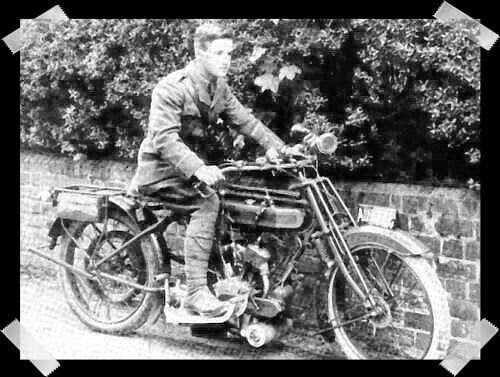
Source: File: Albert and the motobike.jpg, 2015. Second Lieutenant Albert in the North Midlands Divisional Cyclist Company. 21 March 1915. [online] Available at: <http://albertball.homestead.com/Gallery7.html> [Accessed: 21 March 2015].

i The Quiet Boy

Perhaps known most for its medieval outlaws
and skilled manufacturers of Victorian lace -
Nottingham, where one child that would grow
To be called an 'ace,' in the first century’s war.

The father, whose birth name he was given - once
Popularised by Queen Victoria's Prince Consort -
Albert. An ambitious businessman of Nottingham,
Who raised his occupation from plumber to mayor
Of his city - a man who worked his way to prosperity,
In profession of land dealer and owner of property.

Such progression for a Victorian man was a radical
Success - in ability to raise his family to middle class
Status. Albert the father, proved himself with address
Changes - and by 1893 progress led the Ball family
To 301 Lenton Boulevard - three years later a son
Was born to be given his father's name, Albert Ball.

Harriet and Albert senior continued to move about
The streets - as in 1900 to Sherwin Lodge and finally
To 43 Lenton Road, Sedgely House. They arrived
Inside the Park in a high gabled home with views
Of Nottingham canal and the Castle Meadows - while
An older sister had died young, Albert was joined by
Cyril and Lois, all to be reared into the middle class.

Education for Albert progressed with his prowess
For practical subjects - He moved from Lenton Church
To Grantham Grammar schools and then onwards
To Nottingham High School - until January 1911,
Aged 14 Albert arrived at Trent College, Long Eaton.

Not possessing great academic ability, young Albert
Preferred carpentry, wood modeling, playing violin
With a keen eye for photography - At age of 17
Albert Ball was a young man for the modern age,
With talent for mechanics  - with parental support
At home Albert had space of a shed, with time spent
To understand engines and electrical equipment.

One ability, that Albert senior taught Albert Junior
At Sedgely was the skill of shooting - In developing
A good eye Albert became a crack shot - to prove
Useful within a few short years. This young boy
Also possessed a self sense of religion that did not
Hinder his urge for daring adventures - on his 16th
Birthday Albert, with a steeplejack, climbed up atop
A tall factory chimney, without showing sign of fear;
Belied a quiet shy boy, happy in his own company.

Albert Ball at school had been a scout patrol leader -
Possibly not standing out too much being five foot
Six inches with a stocky build - although his features
Were modern for his time, with a complexion to make
Girl’s envy - with dark eyes and thick dark hair, Albert
At seventeen in 1913, was ready for a pin up status.

ii The Loyal Boy

Devoted and close to his father mother and God,
Albert had already had something of a history.
Of daring, when at the age of five he nearly died.
Playing along in his nursery Albert lit matches
Promptly setting fire to the room. Proud parents
Of their grown boy had watched their son from
Their home, as they observed him sail a boat
Down the canal that he had built at college - yet
Another incident had occurred on a family holiday.

One summer at skegness, Lincolnshire, an eager
Albert Ball had built himself a raft - to continue
All night to complete the structure - which he took
Next day to launch on the sea. Out from shore
Led him to difficulties and Albert had to swim home
The abandoned craft, later brought in by fishermen.

Seemingly born with an enquiring mind he left school,
Stating how he wanted to be an electrical engineer
He had foresight for the future trade and with fathers
Help secured a place at Universal Engineering works -
Next to their home - from shed to industry all seemed
In place for the lad in 1913, until war broke in 1914.

Albert, ever eager for new adventure, was ready
To serve - at Trent College having been a member
Officers Training Corps, made for a good candidate.
At that time his Uncle Frederick was Mayor -
Albert's mother acting Mayoress - all to attend forces
Recruiting meeting, in presence of Duke of Portland.

How could an 18-year-old Albert Ball not resist?
He joined 2/7th Sherwood Foresters City Battalion,
Nottinghamshire and Derbyshire Regiment - to start
Training at Wollaton and Derby Road Drill Hall.
With his ability and quiet confidence, Albert soon
Became Sergeant Ball - his eagerness and likely
Encouragement led to application for a commission.
When by October 1914, stood Second Lieutenant
Albert Ball - freshed faced with the Sherwoods.

Soon frustrations took over, without any likely sign
Of his getting to the front - despite needs for men
Out in France and Belgium, during a harsh winter.
With the new year of 1915 he self created a move
To the front - Albert transferred to North Midlands
Divisional Cyclist Company - to bike it there perhaps.

iii The Officer Boy

Talents for all matters Mechanical led Albert
To be stationed at Bishops Stotford - quartered
There, the young officer was to find an incident
Involved him in a tragedy, amid ranks of the army.
Attached to the cyclist Corps was Private George
Harrison a Territorial of the Sherwood Foresters,
Invited to a supper held by Lieutenant A. Ball,
At the Railway Hotel, where seven attended event.

The date of entertainment was 13th March 1915
Arriving an hour late at 8.30 p.m. Private Harrison
A new recruit of two months, was in excited state
Having already had a drink - was also to drink two
Glasses of ale and three soda whiskies - all poured
By tea total Albert Ball. At 9 p.m. the supper ended
And the private in the fresh air was affected Albert
Ball sent two men to help him back to his billets.

Lieutenant Ball had not seen the Private previously
Drunk, to state he would have stopped him if known.
Champagne had also been served between seven
Guests which Private Harrison did not touch -
A corporal Parkinson had seen Harrison earlier
on the Saturday, when they were going for a shave.
After which, the two men had each drank three ales.

Corporal Parkinson saw him again at the supper,
And was in the 'same boat,' to drink champagne
Three whiskies and two beers - at his billet he slept
Sound - A Private Hubbard as one of the men to help
Harrison back - who, unable to stand, helped him
Onto a straw mattress, undoing his coat and collar -
Promptly being sick, Harrison fell asleep - about
Midnight Hubbard saw the private sleeping deeply.

Sunday morning at 6 a.m. Harrison was found dead.
At an inquest a Doctor said the man had lain upon
Mattress amid his vomit, dying some hours before.
An examination said that he was a healthy man, but
Partial digested food had been lodged in the larynx,
That had caused asphyxia resulting in his death.

The coroner’s verdict was that Lieutenant Ball
Had recklessly encouraged drinking, being tea-
Total himself - the officer should have been wise
And discreet, to refuse more drink to the private
And the corporal - Lieutenant Albert Ball had not
Realised the alcohol's effects - he was warned.
Outcome was no blame imputed to the Lieutenant
Who was a very inexperienced, ignorant Officer.

The fresh face Albert around this time had one
Vice, smoking - which he had promised his father
To stop - possibly to excite him more, was buying
A motorbike - with £2 profit he sent it back home
To Nottingham - no doubt believing of its future
Investment - Along a rocky path Albert Ball had
Trod yet to learn values of military responsibility.

by Jamie Mann.

Source.,1915. Albert Ball. Wikipedia, the free encyclopedia, [online] Available at: http://en.wikipedia.org/wiki/Albert_Ball [Accessed: 21March 2015].

Source.,1915. Albert Ball V.C. by Dr Denise Amos. The Nottinghamshire Heritage Gateway, [online] Available at: http://www.nottsheritagegateway.org.uk/people/albertball.htm
 [Accessed: 21 March 2015].
Source.,1915. Albert Ball V.C. February 2012 Meeting Report Speaker - Brian Fernley. The Nottinghamshire Heritage Gateway, [online] Available at: http://www.keyworth-history.org.uk/about/reports/1202.html [Accessed: 21 March 2015].

Source.,1915. Albert Ball Junior. Lenton Times. From 'The Lenton Listener' Issue 14 September - October 1981, [online] Available at: http://www.lentontimes.co.uk/images/gallery/albert_ball/albert_ball_listener_14.htm [Accessed: 21 March 2015].

Mann, J., 2015. 100 years Ago - Poems by Jamie Mann. [letter] (Personal communication, 21 March 2015). 


#WW1 #WW1centenary #GreatWar #WW1poem #GreatWar #ww1centenary #worldwarone #worldwaroneremembered  #WW1Nottingham #WW1AlbertBall

Thursday, 19 March 2015

Poem ~ Ship Outwits Plane - Friday, 19 March 1915


The Blonde under Ariel attack  - sketch by Jamie.   From an original image by E.S.Hodgson For The Graphic. March 27 1915. An original image can be seen at: http://www.amazon.co.uk/AEROPLANE-ATTACK-STEAMER-BLONDE-ZEPPELINS/dp/B0053WKH80

With many merchant ships about seas,
Came an event of chase and avoidance,
Between a Taube and the steamer Blonde.
At the time the ship was in the vicinity
Of 3 miles off the North Foreland - moving
About the coast, off Margate and Ramsgate.

Mr Reoch, the second mate was on duty
Around10.30 a.m. on the bridge - when
The fellowManning the wheel, called him over.
They both observed, as a shape of aeroplane
Came towards them,moving at some speed.

The craft slow as it neared the boat and they
Saw on its side the sign of an Iron Cross -
A German craft - quite plainly they looked
At two pilots, seated side by side; the two
On the boat regarded the two in the air.

The boat's alarm was raised as the plane
Encircled the ship - Captain Milne came
Atop with all hands called up to deck -
One able seaman, Henry Chessnell, was
Then in his berth - despite having been
Unwell, he rushed to join the crew on deck.

The pilot of the Taube used the craft's
Ability at 500 feet above their target -
First one then another bomb dropped
Within short feet of the stern  - one
After another blew the sea with reaction
To shudder the hull of steamer Blonde.

With the Blonde's siren raised at full
Sound, was hope to attract other vessels
In the area. At the helm Captain Milne
Ordered quick action and with great skill
The steamer moved half to starboard,
Then the engines kicked into top speed.

Now the steamer moved at a high rate
To drive into a circular course - to disable
The Taube pilots ability in getting a good
Bombing position - another attempt made
To drop bombs on the ship hit the water -
20 feet beyond bows without any harm.

Roused Germans, having failed twice,
Were determined still to make a hit.
The pilot manoeuvred down low -
Enabling the crew to see their faces.
Finally the fifth bomb came, again fell
Safely at a distance from the starboard.

Able Seaman Chessnell had clung
Tightly to an edge with terror - shouted
Words of the crew had raised, as ship's
Siren screamed. The deck beneath
Him ached and shuddered - at speed 
He gaped at the craft, that dip about -
Fear gripped Able Seaman Chessnell.

With their supply of bombs dropped,
The Taube turned and at some velocity
Departed the area - then, with normality
Back, the heightened crew loudly debated
The event, as their Captain Milne sighed.

With the affair over, the crew went back
To their duty, as Able Seaman Chessnell
Went back to his berth, shaken - his face
Pale and grey. In concern for the ailing
Man, the Chief mate visited him over
A number of hours, to see how he was.

Henry Chessnell, a vague look in his
Eyes, confessed how the event of the
German bombs had put him on edge -
With hours of sleep the ill man awoke.
In need of air he went atop - as he took
Breaths, in a look out to sea, he collapsed.

Despite the fellow crew rushing to assist
Him, Henry Chessnell died within minutes - 
A medical officer told an inquiry at South
Shields, the man had suffered some days
With ill feeling - that on examination found
He had a 'fatty degeneration of the heart.'

The jury returned the verdict, how that
Able Seaman Henry Chessnell had died
Of terrible shock, resulting from the assault
On the Steamer - which had accelerated
The current condition of the man's heart.

by Jamie Mann.

Anon.,1915. Death from Aeroplane Shock. The Daily Telegraph, [online] 19 Mar. P.7. Col.5. Available at: http://www.telegraph.co.uk/news/ww1-archive/11480912/Daily-Telegraph-March-19-1915.html [Accessed: 19 March 2015].

Anon.,1915. Bomb Droppers Outwitted. Horowhenua Chronicle, [online] 05 May. P.2. Available at: http://paperspast.natlib.govt.nz/cgi-bin/paperspast?a=d&d=HC19150503.2.11 [Accessed: 19 March 2015].

Mann, J., 2015. 100 years Ago - Poems by Jamie Mann. [letter] (Personal communication, 19 March 2015). 


#WW1 #WW1centenary #GreatWar #WW1poem #GreatWar #ww1centenary #worldwarone #worldwaroneremembered #WW1Kent