Showing posts with label Commerce. Show all posts

Friday, 6 January 2017

Poem ~ A Captain's Mutiny - Saturday, 6 January 1917 - Wednesday 10 January 1917


Impression sketch of Captain Stayman attcking Gunner Gifford by Jamie

With two days to 1916's close,
A Saturday’s magistrate’s court
Took place in Plymouth - Captain
Of a merchant ship was charged,
For grievous bodily harm and
Attempted murder of a crewman.

The merchant ship, Ciaverley,
In November and December
1916, had been on a trading
Tour from Asian city, Rangoon -
For defence the boat equipped
By a naval gun and gunners.

An initial event took place
On Thursday November 30th,
During maneuvering between
Other vessels - Captain Stayman
On the bridge of the Ciaverley
Gave an order to the helmsman.

Yet Chief Officer, John Edward
Jackson, stepped forward and
Countermanded the given order;
To turn about in order to avoid
Colliding with another vessel.
Result; Captain Stayman fumed.

By refusal to listen to reason,
Chief officer Jackson was then
Viciously attacked by the fists
Of the drunk Captain - this act
Being witnessed by the crew;
Stayman's frequent behaviour.

On Friday December 8 1916,
Captain Stayman was again
Very drunk, while they sailed
Across the Mediterranean sea -
Then at a distance, within range
Of their guns was seen a ship.

Captain Stayman was informed
That this vessel was a hospital
Ship - despite this fact he gave
Instructions to the gunner to fire
On the vessel, which sailed in
Range of their defensive guns.

Amid the Royal Naval Reserve
Gunner John Lloyd Gifford
Refused; he stated that the boat
Was not an enemy but hospital
Ship. Stayman said 'I don't give
A damn. Open fire on that boat.'

Reply; 'I will not open fire on
That hospital ship.' Gunner
Gifford turned to the other
Crew who he defied to try
And touch any gunnery -
The incident then passed.

Having not been forgotten
By Captain Stayman, time
Passed until the Boxing Day.
Stayman confronted gunner
Gifford, whom he then asked
If he would report his order.

Would he tell authorities,
That he had ordered Gifford
To fire on the hospital ship?
The 33-year-old Seaman
Said nothing; he turned away
Suggesting that he would.

Stayman had brooded all
Day - both stood on deck.
When Gifford turned about
Walk aft, Stayman launched
At him - fuelled by drink
The captain siezed him.

They struggled and Gifford
Was pushed against the rail.
Stayman was ready to send
Him overboard, as ship lurched
Starboard - Gifford broke free
And ran, hiding on the boat.

Captain Stayman did not
Give in so easily - convinced
The gunner would inform
Authorities of his intent to
Destroy a hospital ship,
He searched high and low,
Until he found the man.

Stayman rushed at Gifford,
Grabbing him with damned
Threats of murder - other
Crew members restrained the
Captain - the strongest had
To lock him up in his cabin.

With hands handcuffed
Behind his back, Stayman
Declared the crew's mutiny -
The Captain was locked away
To be fed via a porthole, while
Ciaverley continued passage.

With the Plymouth magistrates
Hearing the story of witnesses
To number nine crew, who said
Stayman had been frequently
And dangerously drunk - they
All decided to put him in irons.

Gifford confirmed Stayman was
Drunk, when ordering to fire at the
Hospital ship - Captain Stayman
Declared 'not guilty' - with all bail
Withheld, he was charged under 
Defence of realm's naval authority.

by Jamie Mann.

Anon.,1917. Sea Captain Charged. The Daily Telegraph, [online] 01 January 1917. P.5. Col.5. Available at: <http://www.telegraph.co.uk/news/ww1-archive/12214057/Daily-Telegraph-January-1-1917.html> [Accessed: 06 January 2017].

Mann, J., 2016. 100 years Ago - Poems by Jamie Mann. [letter] (Personal communication, 06 January 2017). 


http://worldwaroneblogger.blogspot.co.uk/

#WW1 #WW1centenary #GreatWar #WW1poem #GreatWar #WW1centenary #worldwarone #worldwaroneremembered #WW1Plymouth

Sunday, 16 October 2016

Poem ~ A Swiss Spies for Germans - Monday, 16 October - Thursday, 19 October 1916

Impression sketch; recruitment of Swiss spy Felix Malherbe.

From neutral Switzerland came source
Of subjects, willing to sell services
For purposes of Germany's war intent.
Exact numbers to be then classified
By the French army - for their missions
Such recruited spies travelled miles.

A subject of Switzerland Felix Malherbe,
An electrician, later confessed how his
Involvement as a spy began - six months
Of war had passed, when in February
1915, Felix Malherbe was sat on a bench.
A man came to him asking his situation.

Felix Malherbe had no work or money.
The stranger talked to him asking about
His past, his knowledge and his ability
To speak French - studying his passport
Malherbe evidenced he could freely travel
About France - did he want to earn money?

In agreeing to idea of taking work Malherbe
Was asked to report to a brewery in Geneva.
On arrival there he met a German man from
Loerrach - being a German city close to the
Swiss border - Malherbe learned from him
About the German Intelligence Service.

Given 100 francs Malherbe then agreed
To go on an initial trip across France - war
Was still young and battles over frontiers
Had happened - in the proximity of Cernay
With the battle of Mulhouse, Malherbe
Was issued with specific orders to follow.

This was to be a trial to see how well he did
Various tasks - Malherbe was requested
First to travel via Bellegarda to Lyon, Dijon
And Duchy of Bar, to finally reach Troyes.
A return journey to take in Belfort and Delle,
Having gained information to make a report.

Specifically Felix Malherbe was ordered
To find out about cost of raw materials,
Commodities and resources - to observe
The French state of mind at Villefranche;
Where the engineering company Vermorel
Was engaged in manufacturing of shells.

The Germans wanted to know how many
Worked there - age groups and if men 
Or women. At Dijon Malherbe had to find
How well the army shops were supplied -
Onwards to Neufchâteau, where he would
Discover that a woman of the intelligence
Group had been arrested, as suspected.

At Brienne-le-Château Malherbe learnt
About artillery ammunition of the French.
With the trip going to plan, he returned to
Loerrach via Troyes - here questioned
At length - Malherbe was given 800 francs.
Next he was asked to travel to Cherbourg.

21 March 1915 Felix Malherbe set upon
A mission - meeting a woman of German
Secret Service who had passed him
A newspaper - a series of codes had been
Written In the margin that he conveyed
To Basel. Next he travelled to Cherbourg.

There he looked into state of naval guns,
Then onto Saint-Malo - Malherbe passed on
Information - along to coast from Manche
Into Brittany to arrive Brest; here to discover
About Bretagne Battleship progression and
Goods and coal being shipped to England.

Other boats Malherbe looked for information
On were transatlantic SS Paris, along with
SS France; turned into a merchant cruiser.
Also in Brittany Malherbe arrived in Nantes,
To spy on imports of British steel and state
Of plants; idle by lack of labor or materials?

After passing on information to a German
Spy in Nantes, Malherbe soon travelled
To Paris - to meet four German officers
Disguised as British Red Cross - at end
Of March Malherbe was back in Loerrach,
Providing the secret service with a report.

Handed a total of 1,100 francs Malherbe
Was asked to travel again - at Villefranche
His mission to look into Vermorel plants.
There discovering amounts of shells
Being made, also to find about industrial
Goods produced and moved out by train.

Journeying to Poitiers central France, the
Experienced spy Malherbe looked into
French army enrollment and movements
Across to Evereux in Normandy - after
To Rouen, where 20,000 British 40,000
French troops were being moved to front.

Whilst in Normandy, Malherbe found out
About shipping boats origins and cargos,
To observe unloading of army supplies
By the British - then he looks into numbers
Of wounded or sick troops, to consider
French women’s morality for reference.

German newspapers intentions to say
French immorality was rife and debauchery
Existed in the country - after trying to find
About barracks to house recruits, Malherbe
Moved onto Valbonne southeast France,
To spy on colonial and Montluel troops.

Close to Rhone Alps city Lyon, he sought
Information of troops stationed at Banne
Camp - in same region Malherbe paused
At a station of Saint-Germain-des-Fosses,
To watch troop transports and presence
Of artillery - noting details of an airfield.

After Orleans he found where British were
Stationed - Malherbe back in Paris delved
Into the city’s economy - from 29 March
Spy Malherbe had covered many miles -
Throughout April he had asked questions
To then look at Paris' people and defences.

On 4 May Malherbe journeyed to Troyes,
North central France - his subject there
To look into how factories operated again
And the moves of transport - this talented
Electrician started to falter, running out
Of luck; to be stopped at the train station.

With routine passport checks done more
Thoroughly, Felix Malherbe was detained
And quizzed - due to lack of a diplomatic
Signature - a further search of the Swiss
Subject had found he possessed details;
Regiment numbers and other information.

Imprisoned at Troyes Malherbe underwent
A trial - providing all details of his activities.
In his defence he made an appeal to Troyes
Protestant Chaplin - but charges were held;
Felix Malherbe had conspired with enemy
In 12 months. 12 May 1916 came sentence.

Whilst no immediate execution was made,
He sought a presidential pardon; time ran out.
Monday 9 October 1916 spy Felix Malherbe
Aged 41, finally faced his firing squad 5 a.m.
At Hauts-Clos, Troyes - to be given a small
Paragraph in the English Daily Telegraph.

by Jamie Mann.

Anon.,1916. Spy Shot In France. The Daily Telegraph, [online] 10 October 1916. P.6. Col.6. Available at: <http://www.telegraph.co.uk/news/ww1-archive/12213413/Daily-Telegraph-October-10-1916.html> [Accessed: 16 October 2016].

Source: File: Une affaire d'espionnage à Troyes. Available at: <http://www.jschweitzer.fr/notre-histoire/espionnage/m> [Accessed 16 October 2016]

Mann, J., 2016. 100 years Ago - Poems by Jamie Mann. [letter] (Personal communication, 16 October 2016). 


#WW1 #WW1centenary #GreatWar #WW1poem #GreatWar #WW1centenary #worldwarone #worldwaroneremembered #WW1Spies

Wednesday, 29 April 2015

Poem ~ How to Make a Gas Mask - Thursday, 29 April 1915


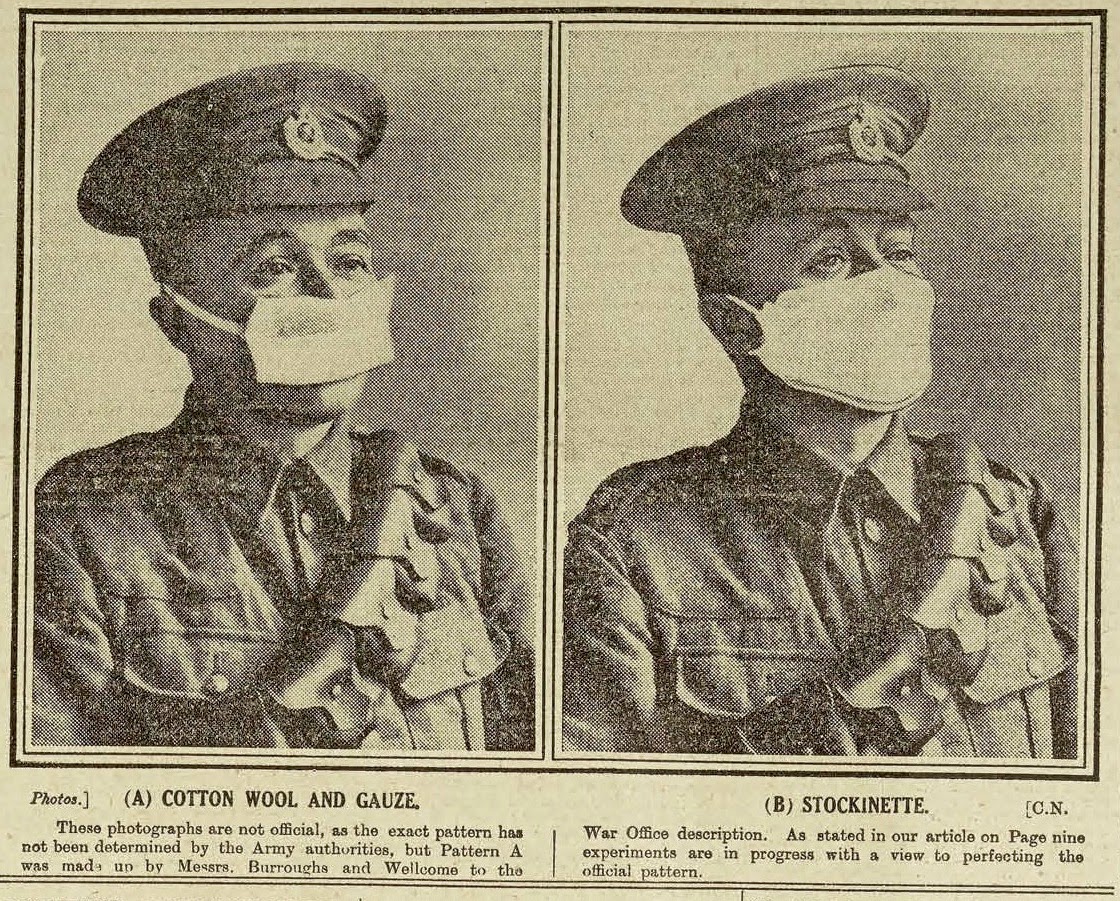
Source: File: Two types of gas makes to make at home. jpg. The Daily Telegraph, [online] P.3. Col.3-4. Available at: http://www.telegraph.co.uk/news/ww1-archive/11561784/Daily-Telegraph-April-29-1915.html [Accessed: 29 April 2015].

An odd thing occurs in war,  
When an appeal is made,
For households to produce
Vital soldier's equipment.

The War Office had issued
Requests for protections,
To be made against new
German weapons of war.

Two types of respirators,
Might easily be produced -
An oblong pad may make
A mouth and nostril cover.

3 in by ¾ in. by 5 ½ in. 
Absorbent cotton Wool –
Bleached, covered by 3
Layers of cotton gauze.

Then a band will hold this
About the head, to keep
In place - made of ½ in.
Cotton elastic 16 in. long.

Alternatively, comes the
Makeshift idea, of double
Stockinette, 9 ½ in. long and
3 ½ in. wide narrow to 2 ½ in.
  
Attached at each end will be
Thick plaited worsted 5 in.,
Attached at each end, to loop
Over the ears to stop all gas.

Illustrations were provided
Of a soldier, wearing each
Alternatives for the home
Industrial gas mask makers.

All seems a little amateurish -
For almost a privately funded
War - furthermore an address
Is given to send in batches.

Requests for 100 of homemade
Respirators, to ordnance officer.
All having little, or no chance,
Of saving lives of their soldiers.

So what about eye protection?
Illustration A is a mock up made
By Ms. Boroughs And Wellcome.
Picture B gives stockinette look.

All being the unofficial image
With B possibly being marginally
Better fashion, until experiments
Decide on lack of effectiveness.

by Jamie Mann.

Anon.,1915. An Appeal for Respirators. The Daily Telegraph, [online] 29 Apr. P.3. Col.3-4. Available at: http://www.telegraph.co.uk/news/ww1-archive/11561784/Daily-Telegraph-April-29-1915.html [Accessed: 29 April 2015].

Mann, J., 2015. 100 years Ago - Poems by Jamie Mann. [letter] (Personal communication, 29 April 2015). 


#WW1 #WW1centenary #GreatWar #WW1poem #GreatWar #WW1centenary #worldwarone #worldwaroneremembered  #WW1Gas 

Saturday, 11 April 2015

Poem ~ Imminent Invasion - Sunday, 11 April 1915


Source: Invasion - Avon Tyres Advert. The Daily Telegraph, [online] 10 Apr. P.4. Col.5-7. Available at: http://www.telegraph.co.uk/news/ww1-archive/11520509/Daily-Telegraph-April-10-1915.html [Accessed: 11 April 2015].

With a countryside view in Wye Valley
Two men, two women look back,
Pointing down to Tintern Abbey -
Pausing in an open motorcar to show
The freedom of the open road.

Above hangs the word 'invasion.'
So what’s the bother about Germans
Invading the British county? - well
Why not invade it yourself, proclaims
Some cheery tyre tube called Bill.

With the continent well and truly
Closed to tourism, the guide makes
For 'stay-at-home holidays' -
Which is stated as not only patriotic
But is totally compulsory.

Bill the tube advises how Harogate,
Baden Baden or Bath can all be
Places of cures  - how Scottish glens,
Yorkshire moors and Surrey lanes
Can offer so much more.

Equal to any continental place
Is spring of any open English Road -
With the Lakes, Devon Forests
And mountains in an Emerald Isle -
Full of neglected charm.

Such is the fortune of the fortunate
Motorist - the chosen few whose
Money can be spent liberally -
So runs the advert for those
Who can afford good tyres.

Endurance, resilience and strong
Safety in the English sounding Avon
Tyres available in British towns, with
Solid types, ideal for trade vehicles;
The Avon India Rubber Company.

by Jamie Mann.

Anon.,1915. Invasion -Avon Tyres Advert. The Daily Telegraph, [online] 10 Apr. P.4. Col.5-7. Available at: http://www.telegraph.co.uk/news/ww1-archive/11520509/Daily-Telegraph-April-10-1915.html [Accessed: 11 April 2015].

Mann, J., 2015. 100 years Ago - Poems by Jamie Mann. [letter] (Personal communication, 11 April 2015). 


#WW1 #WW1centenary #GreatWar #WW1poem #GreatWar #WW1centenary #worldwarone #worldwaroneremembered  #WW1England

Monday, 10 November 2014

Poem ~ Smoking:Order of War Office - Tuesday, 10 November 1914

Among the important supplies
For the War Office, providing troops,
Is the need of better tobacco -
Thus creating important discussions
Between Lord Kitchener
And Imperial Institute
To resolve this vital issue.

British Colonies over recent years,
Have produced premium
Tobacco over in the Americas -
Also to be included are -
Rhodesia and Nyasaland.
Most recently Canadian tobacco
Leaves have built a market within
Britain - But quality has been absent.

Lord Kitchener keenly negotiated
Specifications of the W.O. department,
For good quality tobacco,
From both Protectorates and Colonies.

So soldiers will be assured - they will
Be able to breathe more easily,
Knowing that quality cigarettes
Will now have their name on the packet.

by Jamie Mann.

Anon.,1914. British Tobacco for Troops. The Daily Telegraph, [online] 10 Nov. p.13. Col.1. http://www.telegraph.co.uk/news/ww1-archive/11208761/Daily-Telegraph-November-10-1914.htm  [Accessed: 10 November 2014].

Mann, J., 2014. 100 years Ago - Poems by Jamie Mann. [letter] (Personal communication, 10 November 2014). 


#WW1 #WW1centenary #GreatWar #WW1poem #GreatWar #ww1centenary #worldwarone #worldwaroneremembered
 #WW1London

Thursday, 6 November 2014

Poem ~ Earnings of a Lady Typist - Friday, 6 November 1914


No other class of women workers,
Than girl typists - had felt the harder
Pinching effects on them from war.

Closure of the Stock Exchange
And other financial business’
Caused cause a great demise
In employment of many women.

The end of English Agents offices,
In the trade for foreign goods,
Has also added to the big effect.

Finding themselves in a pitiful plight,
With promise of a dreary winter ahead,
Were ladies with any other skills.

The National Patriotic Association
Chairman, Sir George Pragnell,
Devised a particular scheme -
By his knowledge of organising,
Of the wholesale drapery trade.

Knowing of strains in manufacturing
Sir Pragnell had insight to see 300,000
Army webbed belts being quickly used.

The Queen's appeal to all the women
Of the Empire, had well met the target
For the patterned belt - with more needed.

Sir Pragnell's keen and able abilities
Convinced the War Office for the best
Belt pattern would be the French -
Made of double flannel, was a protective,
Warm field garment, for all their soldiers.

Progress came with the Committee,
On Unemployment and a War Office
Contract, for such garments.

The easily crafted belts, could provide,
Opportunities for any girl typists
With no effect on workers,
In any other current industries.

Word spread as wild fire in the city,
Of exclusive employment for girls,
Provided by the Patriotic Association.

At their offices at St Paul's Churchyard,
Came the call - hand or machine sewers
Aimed at lady typists out of work -
Or any other means of livelihood.

On production of good references,
Each applicant was given a card
To complete; name, statement,
Typing skills and shorthand speed,
And knowledge of sewing possessed.

Each girl given enough cloth to make,
Four belts at home overnight – returned
To earn them 3d each, if finished well.

These belts were formed of flannel straps
Being 1 and 1/2 yards in total length -
Wider at the front, tapering at the ends.

Two lengths of the flannel - to be neatly
Sewn together, with stout webbing, either
End - making with an over sewn slit upon
One side, for the other end to pass through,
Giving an adaptable belt, for any sized man.

In satisfactory receipt of said made belts,
The sewer received another bundle of ten-
In completing these, receiving a half crown.

The process repeats for 5 days a week -
So 12s and 6d can be earned, it’s believed.
Any able girl can make two belts per hour.

While those with a sewing machine
Can complete one every 20 minutes.
Each belt is expertly checked -

Attention made to the webbings strength.
200 girls are then daily employed
Between them making 2000 belts daily,
With a grand total of 10,000 per week.

Continued preparations are needed
For men in the field and in training.
So needs for these are likely to last.

Supplies of flannel start to shrink
With requisitions of the navy arm -
As Red Cross, Russia and France
Make requisition for woollen goods -
So is the need to build reserves.

This process creates growth
Of registering girls for work -
When a young man answers
His country's call, a girl is chosen
To take his place -for some organisers'
It is a surprise how many ladies
Possess exceptional abilities.

An employer requesting a girl with able 
Knowledge of figures – after an hour’s exam
One girl’s skills changed a city man’s mind.
Another lady proved her worth; a rapid
Shorthand writer of Spanish and French. 

Viscountess St Cyres, representing
Association of Women Clerks,
And Secretaries joined panel for
Professional Classes War Relief Fund.

Her purpose; to find women clerks
Work in their profession - with particular
Attentions given to highly trained,
And most competent women.

Funds from one philanthropist provided
Trained secretaries for schemes
Of public relief  - that might have
Only found volunteers or untrained clerks.

On occasions when work cannot be found,
Younger members are to be trained,
For other posts in colonies or elsewhere.

by Jamie Mann.

Anon.,1914. Girl Typists - Scheme of Paid Work. The Daily Telegraph. [online] 6 Nov. p.4. Col.1-2 . Available at: http://www.telegraph.co.uk/news/ww1-archive/11208699/Daily-Telegraph-November-6-1914.html [Accessed: 6 November 2014].

Mann, J., 2014. 100 years Ago - Poems by Jamie Mann. [letter] (Personal communication, 6 November 2014). 


#WW1London WW1 #WW1centenary #GreatWar #WW1poem #GreatWar #ww1centenary #worldwarone #worldwaroneremembered